What Does Lung Cancer Look Like? 7 Lung Cancer Images
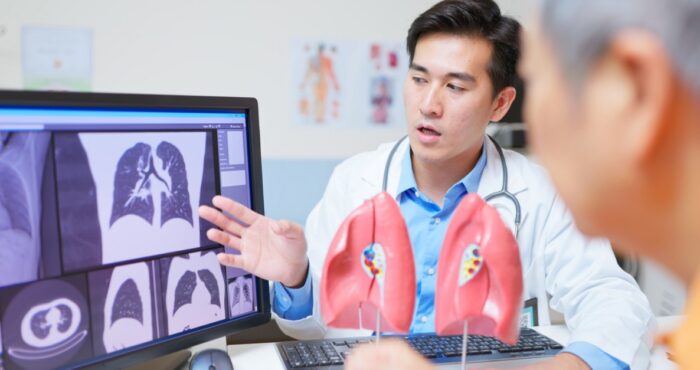
What lung cancer looks like depends on how it presents in each person. It may cause symptoms that are easy to mistake for other conditions, like a cough that won’t go away or shortness of breath.
Lung cancer tumors can also show up on medical scans before symptoms start. What lung cancer will look like on a scan can vary, but it often presents as a lump or mass near the lungs. If it has spread, tumors may be found in other parts of the body.
Knowing the warning signs and what doctors look for during screenings might help you speak up sooner and better understand your test results.
Learn more about what lung cancer looks like by reviewing 7 lung cancer images that show how doctors spot this disease.
How Doctors Get Lung Cancer Images
Lung cancer can show up on different types of scans, depending on what your doctor determines is the best diagnostic tool for your case. They may also specialize in using certain medical imaging tools.
Doctors can use these tests to get images of lung cancer:
- Chest X-ray: This is often the first test a doctor uses to look for anything unusual in the lungs.
- CT scan: This test can show the size, shape, and position of a lung tumor, plus any swollen lymph nodes.
- PET scan: A tomography machine looks for radioactive tracers that gather around tumors or inflammation, creating a visual image of potential cancer growths.
- PET-CT scan: This combines a PET scan with a CT scan, which takes images of a contrast material inside the body to visualize suspected tumors.
Scans can’t confirm lung cancer by themselves, so your doctor may schedule a biopsy to collect a tissue or fluid sample of a possible tumor. They’ll send it to a pathology lab before providing a lung cancer diagnosis.
Get a Free Lung Cancer Guide now to learn more about diagnostic tools, testing, and financial support if you or a loved one was recently diagnosed.

- Understand risk factors
- Find top treatments
- Pursue compensation

What Does Lung Cancer Look Like on X-Ray Scans?
On an X-ray, lung cancer often shows up as a spot or mass that looks different from the healthy lung tissue around it. The nearby bones look white, soft tissue looks gray, and air-filled lung tissue looks dark, so a lung tumor often stands out as a lighter area.
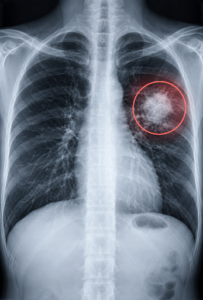
Other signs of lung cancer in an X-ray image include:
- A partially collapsed lung: A lung cancer tumor can block an airway and cause part of the lung to collapse
- Fluid around the lung: An X-ray can show fluid collecting around the lungs, which may happen when lung cancer spreads
- Irregular shape: Spots with spiky or uneven edges are more likely to be cancer
- Light-colored mass or spot: A tumor may look whiter or grayer than the dark, air-filled lung around it
- Small nodule: A small, round spot may appear, though most lung nodules aren’t cancer, per the MD Anderson Cancer Center
Sometimes, doctors can see signs of asbestos exposure on lung X-rays. Asbestos fibers can significantly damage the lungs over time and contribute to a lung cancer diagnosis. They also worsen the harm that smoking does to your lung tissue.
If an X-ray reveals a suspicious finding, a doctor may recommend a CT scan for a more detailed view and a biopsy to determine whether cancer is present. They may also need additional imaging if the finding appears too small or is hidden behind the heart, ribs, or other structures.
What Does Lung Cancer Look Like on a CT Scan?
On a CT scan, lung cancer can look like a solid mass, a small nodule, or a hazy patch of lung tissue. Doctors order this type of imaging to get more detailed images of specific body parts, like the lungs.
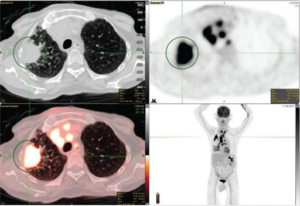
Lung cancer in CT scan images may look like:
- A solid mass: A dense growth can block the view of the lung tissue behind it
- Enlarged lymph nodes: Swollen lymph nodes in the chest may contain cancer that has spread
- Fluid around the lungs: A CT scan can spot fluid buildup between the lung and chest wall, which is called a pleural effusion
- Ground-glass opacity: This is a hazy area with spots or growths underneath, which is sometimes linked to slow-growing lung adenocarcinoma according to a Translational Lung Cancer Research report
- Multiple nodules: Several spots could need follow-up scans to see whether they’re growing or changing
- Spiculated (spiky) nodule: A spot with thin, spiky edges reaching into nearby tissue has a higher chance of being cancer
Radiologists see lung nodules in nearly 1 out of every 3 chest CT scans, but most aren’t cancer, according to the Cleveland Clinic.
Depending on what your CT scan shows, your doctor may suggest a follow-up PET scan. They may also recommend getting a biopsy, particularly if the nodule is larger than 9 millimeters, per the Cleveland Clinic.
CT scans can also help catch lung cancer early. People at higher risk of lung cancer may get yearly low-dose CT scans to find new growths before they can spread.
What Does Lung Cancer Look Like on a PET Scan?
A PET scan shows how active lung cancer cells are in a patient’s body. Before the scan, the patient will get a small amount of a radioactive tracer injected through an IV, which takes around 60 to 90 minutes to start working.
Cancer cells collect the tracer, which makes them easier to spot on a PET scan. They may appear brighter than on previous CT or X-ray images. The brightness depends on the tumor’s activity, size, and type, as well as the scan’s color scale.
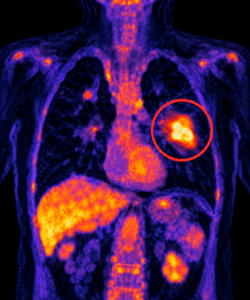
Lung cancer on a PET scan may show up as:
- A hot spot in the lung: A tumor may look brighter than the healthy lung tissue around it because it absorbs more tracer
- Active lymph nodes in the chest: Bright lymph nodes may indicate that cancer has spread beyond the main tumor
- Bright areas in other organs or bones: Hot spots outside the chest may mean the cancer has moved to another part of the body
Doctors usually look at PET results alongside CT images, so it may not be the only imaging your physician recommends. They may also schedule a biopsy to confirm if a PET scan spot is lung cancer.
What Is a Combined PET CT Lung Cancer Scan?
A PET-CT scan for lung cancer combines both tests in one machine. Today, almost all PET scans are done on combined PET-CT scanners. It may save time and provide more accurate results.
The CT part shows a tumor’s size, shape, and location, while the PET part shows how active it is. Seeing both scans in one image helps doctors pinpoint exactly where the unusual activity is.
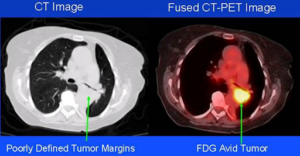
A PET-CT scan for lung cancer may show:
- Bright, active tumor: The PET images may show a hot spot where cells soaked up more of the tracer
- Irregular tumor edges: Lung cancer CT images might show spiky or uneven borders, which are linked to a higher cancer risk
- Spread to nearby lymph nodes: Active lymph nodes may mean cancer has spread beyond the main tumor
- Visible lung mass: The CT images may show a solid growth or nodule in the lung
- Other suspicious areas: A combined scan may find spots elsewhere in the body that need a closer look
Doctors also use PET-CT scans to help figure out which lung cancer stage a tumor might have reached and what other parts of the body may be affected. This helps your care team choose the best treatment options after a biopsy.
Talk with our team now to learn about top doctors, testing, and support resources after a lung cancer diagnosis.
How to Tell If You Need a Lung Cancer Screening
Lung cancer isn’t always easy to identify early on. According to the American Cancer Society (ACS), most lung cancers don’t cause symptoms until they’ve spread outside the lungs.
When symptoms do show up, they can seem like a cold, bronchitis, or another common breathing problem, so it’s easy to brush them off.
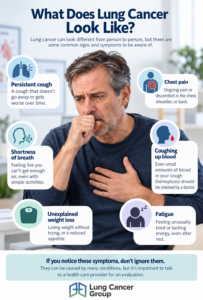
Other possible lung cancer symptoms include:
- Blood or rust-colored phlegm when you cough
- Bronchitis or pneumonia that doesn’t go away or keeps coming back
- Chest pain that’s often worse when you breathe deeply, cough, or laugh
- Cough that doesn’t go away or gets worse
- Fatigue or weakness
- Hoarseness
- Loss of appetite
- New wheezing
- Shortness of breath
- Unexplained weight loss
Having these symptoms doesn’t automatically mean you have lung cancer. However, new symptoms or ones that won’t go away are worth discussing with your doctor, especially if you have risk factors for lung cancer.
Smoking is the main cause, but asbestos exposure also raises your chances of getting lung cancer. If you smoked and worked around asbestos, your risk is even higher than both risks added together.
Lung cancer screenings can help diagnose patients before symptoms start. However, only about 17% to 20% of people who qualify for lung cancer screening actually get them.
The ACS recommends getting a yearly low-dose CT scan for lung cancer screening if you’re 50 to 80 years old and have at least a 20 pack-year smoking history or formerly smoked.
What Does Small Cell Lung Cancer Look Like?
Small cell lung cancer (SCLC) makes up about 10% to 15% of all lung cancers. It usually starts in the center of the chest, around the breathing tubes (bronchi).
SCLC cells are small, but they tend to grow quickly into large tumors. About 2 in 3 people with SCLC already have signs that the cancer has spread when they’re diagnosed.
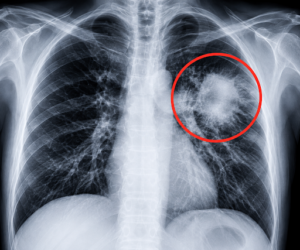
On imaging scans, SCLC may look like:
- A central chest mass: A tumor may show up near the main airways in the middle of the chest
- Enlarged lymph nodes: Many people have swollen lymph nodes in the center of the chest when they’re diagnosed
- Mass pressing on a large vein: A tumor can squeeze the superior vena cava, a large vein in the chest, which can cause swelling in the face and neck
- Narrowed or blocked airway: Tumors that grow inside an airway can block it and cause part of the lung to collapse
- Signs of spread: Scans may show tumors in the adrenal glands, bones, brain, liver, or lymph nodes
CT scans are the main way doctors diagnose SCLC, but PET scans may also find tumors in the lungs. Since SCLC grows quickly, getting tested as soon as possible can make a real difference in planning your care.
What Does Stage 4 Lung Cancer Look Like?
Doctors use four stages to assess how far non-small cell lung cancer (NSCLC), the most common type of lung cancer, has grown. A stage 4 lung cancer diagnosis means the cancer has spread beyond the lungs and chest, reaching distant organs.
On imaging scans for stage 4 lung cancer, doctors might see the main tumor plus signs that the cancer has reached other body parts. NSCLC commonly spreads to the adrenal glands, bones, brain, and liver. On a PET-CT scan, this may look like multiple hot spots in different parts of the body.
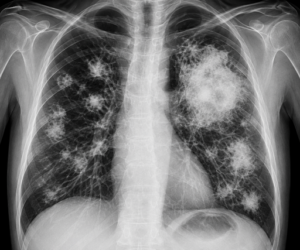
Stage 4 NSCLC may show up on scans as:
- Cancer cells in the fluid around the lungs or heart
- Several tumors outside the chest, in one or more organs
- Single tumor outside the chest, such as in a distant lymph node or organ
- Spots of cancer in the other lung or in the lining around the lungs or heart
A suspicious spot on a scan doesn’t always mean cancer has spread, so your doctor may order more tests to be sure. If you have questions, download our Free Lung Cancer Guide for clarity about imaging and treatments.
- Understand risk factors
- Find top treatments
- Pursue compensation
Can COPD Look Like Lung Cancer?
Lung cancer and chronic obstructive pulmonary disease (COPD) can cause some of the same symptoms, like a long-lasting cough and shortness of breath. COPD can also change how the lungs look on a scan.
These conditions can also happen together. A 2025 Quantitative Imaging in Medicine and Surgery review found that people with emphysema, a type of COPD, had about 2.5 times greater risk of developing lung cancer.
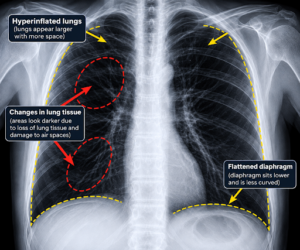
On a chest X-ray, COPD can make the lungs look larger and darker than normal and push the diaphragm (the muscle below your lungs) lower and flatter. Lung cancer often appears as a mass or spot that looks different from the surrounding lung tissue.
Know What to Look for and Get Help for Lung Cancer
Experiencing possible lung cancer symptoms, seeing a spot on a scan, and waiting for test results can be scary. You don’t have to figure this out alone.
At Lung Cancer Group, we work to support patients and families impacted by lung cancer by providing the information you need to navigate a diagnosis.
Our team can help you:
- Connect with support resources for you and your family
- Find top lung cancer doctors near you
- Learn about all of your treatment options
- Pursue compensation if asbestos exposure caused your cancer
If asbestos exposure contributed to your cancer, you may qualify to seek compensation that helps pay for treatments and other costs. Talking with our team costs nothing, and we’re here to help every step of the way.
Call (877) 446-5767 or download our Free Lung Cancer Guide to learn more about your options today.
 Written by:Lung Cancer Group
Lung Cancer Group was established by a team of caring advocates so those with lung cancer and other asbestos-related diseases can get the help they deserve. Our site provides the most accurate and up-to-date information about lung cancer, its link to asbestos, and financial compensation available to patients. Contact us to learn more and get assistance.