Epithelioid Mesothelioma
Epithelioid mesothelioma is the most common of the three cell types of this cancer. While it’s aggressive, epithelioid malignant mesothelioma is more easily treated than the other types, and patients often have a better health outlook. Work with Lung Cancer Group for help finding and affording epithelioid mesothelioma treatment.
What Is Epithelioid Mesothelioma?
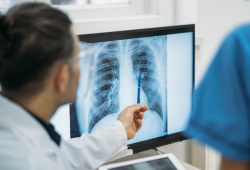 Malignant epithelioid mesothelioma is a type of cancer that develops when epithelial cells, which line the body’s organs and cavities, become cancerous due to asbestos exposure. It’s also known as epithelial mesothelioma.
Patients with this mesothelioma cell type have a better chance of living longer compared to those with the other types, since epithelioid cells generally respond better to treatment.
Epithelioid Malignant Mesothelioma Facts
- Epithelial cells divide quickly but stick together. As a result, tumors don’t spread as fast as those of the other cell types and are easier to treat.
- Epithelial malignant mesothelioma cells look like ovals or rectangles under a microscope. They can form in the lining of the lungs (pleura), abdomen (peritoneum), heart (pericardium), or testicles (tunica vaginalis).
- It is the most common mesothelioma cell type, accounting for around 70% of cases, according to UPMC Hillman Cancer Center.
- The average life expectancy for mesothelioma epithelioid type is 14 months, but some patients have lived for 20 years or more with treatment.
If you have epithelioid mesothelioma, lung cancer, or another asbestos-related disease, Lung Cancer Group may be able to help. Connect with our registered mesothelioma nurses to find top doctors and treatments.
- Access Financial Aid and Justice
- Learn About Your Options
- Contact Us for Free

Epithelioid vs. Sarcomatoid Mesothelioma
Epithelial mesothelioma is the most common and least aggressive cell type. These cells stick together, meaning the cancer is less likely to spread.
By contrast, sarcomatoid mesothelioma is the rarest cell type and the most aggressive. This is because the spindle-shaped sarcomatoid cells don’t stick together as easily and can quickly spread through the body.
Biphasic mesothelioma tumors contain both epithelial and sarcomatoid cells. It’s easier to treat if more epithelial cells are present.
Epithelioid Mesothelioma Causes
The only known cause of epithelioid mesothelioma (and any other type of this cancer) is exposure to asbestos.
When asbestos fibers are breathed in or swallowed, they can get trapped in the body and harm healthy tissues for decades. This leads to inflammation and may cause healthy epithelial cells to mutate into mesothelioma cells.
Those at the highest risk of epithelial mesothelioma worked with or around asbestos-containing products daily, like construction workers or those serving in the U.S. military.
It’s not your fault if you have epithelioid mesothelioma. The risks were hidden by manufacturers of asbestos products for decades. These companies knew asbestos could cause people to get sick but concealed the truth to make huge profits.
Epithelioid Mesothelioma Symptoms
Common mesothelioma epithelioid symptoms include chest or abdominal pain, shortness of breath, and fluid buildup. Symptoms appear 10-50 years after asbestos exposure.
Mesothelioma symptoms can vary depending on where the cancer tumors have formed in the body.
Here are malignant epithelial mesothelioma symptoms by type:
| Pleural epithelioid mesothelioma | Peritoneal epithelioid mesothelioma |
|---|---|
| Chest pain | Abdominal pain |
| Fatigue | Ascites (fluid buildup around abdomen) |
| Persistent coughing | Changes in bowel habits (constipation or diarrhea) |
| Pleural effusion (fluid buildup around lungs) | Loss of appetite and weight loss |
| Shortness of breath (dyspnea) | Nausea |
| Unexplained weight loss | Swelling or bloating |
If you have a history of asbestos exposure and are experiencing any epithelial mesothelioma symptoms, promptly consult a health care professional.
Call (877) 446-5767 now for help finding doctors if you have symptoms of epithelioid mesothelioma.
How to Diagnose Epithelioid Mesothelioma Cancer
A mesothelioma specialist will perform a couple of different tests to diagnose epithelial malignant mesothelioma.
Steps to confirm a mesothelioma epithelioid diagnosis include:
- Initial examination: A doctor will review your medical history, ask about potential risk factors like asbestos exposure, and conduct a physical exam to assess symptoms.
- Blood tests: These can be used to check for biomarkers, substances in the blood that could indicate you have epithelioid mesothelioma.
- Imaging tests: X-rays, CT scans, MRI scans, PET scans, and more can be used to identify any possible mesothelioma tumors.
- Biopsy: A biopsy is the only way to confirm a diagnosis. During a biopsy, a sample of tissue or fluid is collected and examined under a microscope by a pathologist to look for cancer cells.
Once doctors confirm your epithelioid mesothelioma diagnosis, they can recommend treatments to improve your survival time.
Immunohistochemistry to Confirm an Epithelioid Mesothelioma Diagnosis
A special test called immunohistochemistry can help distinguish which cell type is present if it’s hard to tell on a biopsy.
With this, pathologists use antibodies to stain tissue samples and look for proteins that are common in epithelioid mesothelioma, like calretinin or cytokeratin.
They can also look for markers such as Claudin 4, CEA, MOC31, and SPARC to distinguish epithelioid mesothelioma from lung adenocarcinoma or squamous cell carcinoma.
Epithelioid Mesothelioma Prognosis
Epithelioid mesothelioma generally carries a more favorable prognosis (health outlook) compared to other cell types.
Mesothelioma prognosis is measured using two metrics: life expectancy and survival rate.
Epithelioid Mesothelioma Life Expectancy
Patients with epithelioid mesothelioma typically have a median life expectancy of 14 months. However, each case is unique. How long you’ll live depends on your treatment options, tumor stage, and overall health.
It may be possible to survive for many years with epithelioid mesothelioma if you get treated before the cancer has spread. Some patients have lived for 20 years or more.
Connect with our nurses for help finding epithelioid mesothelioma treatments that can ease symptoms and potentially improve your life expectancy.
- Access Financial Aid and Justice
- Learn About Your Options
- Contact Us for Free
Epithelial Mesothelioma Survival Rate
A survival rate measures the percentage of people still alive a certain amount of time after a diagnosis.
Here are the epithelioid mesothelioma survival rates with surgery:
- 2-year survival rate: 45%
- 5-year survival rate: 14%
You have a better chance of outliving your mesothelioma survival rate if you’re diagnosed and treated before the cancer spreads.
Subtypes of Epithelial Mesothelioma Cells
Several rare subtypes of epithelioid mesothelioma exist. Doctors must use great care to distinguish these subtypes, as they can significantly affect your overall prognosis.
Epithelioid mesothelioma subtypes include:
- Adenomatoid mesothelioma: Accounting for around 5% of pleural mesothelioma cases, it is often mistaken for benign (noncancerous) cells, according to a 2022 report published in the Journal of Medical Case Reports. These cells develop in a lace-like pattern.
- Cystic mesothelioma: This is a benign subtype commonly found in cases of malignant epithelioid peritoneal mesothelioma affecting women. Doctors must use immunohistochemical staining to confirm a diagnosis.
- Deciduoid mesothelioma: This accounts for fewer than 5% of mesothelioma cases. It’s more common in cases of peritoneal mesothelioma. Patients have a poor prognosis, with a 1-year mortality (death) rate of 68%.
- Lymphohistiocytoid mesothelioma: This subtype makes up between 1% and 3.3% of mesothelioma cases. Patients typically live for up to 18 months with this cell type. Doctors must make sure to distinguish it from other cancers, like types of lymphoma.
- Small cell mesothelioma: Cases look similar to small cell lung cancer when viewed under a microscope. Prognosis is poor, with patients living around 8 months on average, according to a Translational Lung Cancer Research report.
- Solid mesothelioma: These mesothelioma cells grow in nests or sheets. This subtype has a more favorable prognosis than many others. The average survival time is just under 2 years, as noted by a Histopathology study.
- Tubulopapillary mesothelioma: These cells are shaped like cubes that arrange themselves near cones of connective tissues. The Histopathology study mentioned above found that patients with this subtype live for 1 year on average.
- Well-differentiated papillary mesothelioma: This subtype is more common in cases of peritoneal and testicular mesothelioma. Most cases are benign.
Doctors will make sure to properly determine your epithelioid mesothelioma cancer subtype and develop a treatment plan that best suits your case.
Epithelioid Mesothelioma Stages
There are four stages of epithelial pleural mesothelioma, and they correspond to how far the cancer has spread. Your mesothelioma stage plays a significant role in your overall prognosis and which treatments you receive.
The stages of epithelioid pleural mesothelioma include:
- Stage 1 epithelial mesothelioma: Cancer is found in the lung lining and possibly the lung. Patients have the best prognosis of any type, especially if they receive surgery.
- Stage 2 epithelial mesothelioma: Epithelioid mesothelioma tumors have started to spread deeper into the lung lining, lung, and nearby organs, but surgery is still possible.
- Stage 3 epithelial mesothelioma: The cancer has spread further into areas in and around the chest. It may or may not be possible to treat with surgery.
- Stage 4 epithelial mesothelioma: The most advanced stage, with cancer tumors having spread to distant organs outside of the chest, like the brain. Surgery isn’t possible, but other treatments may help.
The other types of epithelioid mesothelioma don’t have formal stages. Doctors can informally stage patients with either “localized” or “advanced” cancer when making a diagnosis.
Call (877) 446-5767 now for help finding epithelioid mesothelioma treatments, no matter which stage you’re in.
Epithelioid Mesothelioma Treatment
Epithelioid mesothelioma is the easiest of all three cell types to treat. Doctors may be able to use surgery, chemotherapy, radiation, or immunotherapy to help patients live longer.
Learn how different mesothelioma treatments can help epithelial patients like you below.
Surgery for Epithelioid Mesothelioma
There are three main surgical options for epithelial mesothelioma cancer:
- Cytoreduction with HIPEC: Used to treat peritoneal mesothelioma by surgically removing tumors and applying heated chemotherapy. Patients had a 5-year survival rate of 42% and an average life expectancy of 38.4 months in a 2022 report.
- Extrapleural pneumonectomy (EPP): This removes the pleura, the lung nearest to the cancer, and malignant pleural mesothelioma tumors. Epithelial patients had a median survival of 24 months when treated with an EPP in a 2022 Translational Lung Cancer Research report.
- Pleurectomy with decortication (P/D): Also used for pleural mesothelioma, this surgery removes epithelioid tumors and the pleura but keeps both lungs intact. The median life expectancy for these patients was 38.1 months in the Translational Lung Cancer Research study.
Mesothelioma surgery is recommended for patients whose cancer is still in an early stage, as it allows doctors to remove all visible tumors.
Mesothelioma Epithelioid Chemotherapy
Chemotherapy is medication that kills cancer cells or slows their growth. Doctors use chemotherapy alongside other treatments for the best results. It may also be a patient’s main treatment if surgery isn’t possible.
Pleural epithelial mesothelioma patients who received just chemotherapy lived for 24.8 months on average in a 2024 report from The Lancet.
Epithelioid Mesothelioma Immunotherapy
Immunotherapy enhances the body’s immune system to fight cancer cells.
The immunotherapies nivolumab (Opdivo®) and ipilimumab (Yervoy®) helped epithelioid pleural mesothelioma patients live for over 18 months in the CheckMate 743 study. More immunotherapies continue to be studied.
Radiation Therapy for Epithelioid Mesothelioma
Radiation therapy uses high-energy rays to target and destroy cancer cells.
Pleural epithelial patients who received radiation had a median life expectancy of a little over 1 year, according to a National Cancer Database statistics report. Patients may live even longer when radiation is used with other treatments.
Epithelioid Mesothelioma Multimodal Therapy
Doctors can combine treatments to help epithelioid patients live as long as possible. Pleural epithelioid patients who received EPP, chemotherapy, and radiation lived for nearly 27 months on average in a Translational Lung Cancer Research report.
A Cureus Journal of Medical Science report also noted that an epithelial peritoneal mesothelioma patient achieved remission with chemotherapy and immunotherapy.
New and Emerging Treatments
Researchers are studying new treatments for epithelioid mesothelioma in clinical trials.
Emerging therapies for epithelioid mesothelioma include:
- Gene therapy: Adding genes to mesothelioma cells so they’re easier to destroy
- Photodynamic therapy: Using drugs activated by a light source to kill mesothelioma cells
- Targeted therapy: Providing treatments that kill epithelioid mesothelioma cells without harming healthy ones
All of these show potential in improving outcomes for epithelioid mesothelioma patients.
Doctors are also looking for new ways to improve well-accepted therapies. For example, a 2025 Journal of Thoracic Disease report noted that a substance called CD276 could be targeted to treat epithelioid mesothelioma through immunotherapy with the hopes of improving survival.
Palliative Treatments
Palliative care focuses on relieving symptoms and improving the quality of life for epithelioid mesothelioma patients.
Palliative treatments like pain management, fluid drainage, and supportive therapies can ease discomfort and improve overall well-being for those with epithelioid mesothelioma.
Compensation Options for Epithelioid Mesothelioma
If you or a loved one has been diagnosed with epithelioid mesothelioma, you may qualify for compensation to cover expenses and find peace of mind.
Epithelioid mesothelioma compensation options include:
- Mesothelioma lawsuits: You may be able to seek compensation from manufacturers of asbestos-containing products by filing a lawsuit. These lawsuits typically reach settlements worth $1 million or more, allowing you to avoid the hassle of a trial.
- Asbestos trust funds: Many asbestos companies have established trust funds to compensate victims and avoid lawsuits. There’s $30 billion available in trusts right now.
- Veterans benefits: Veterans with mesothelioma may be eligible for benefits from the U.S. Department of Veterans Affairs (VA). These benefits include monthly payouts worth over $4,000 a month and free or inexpensive medical care.
Get a free case review now for help finding compensation options after an epithelial mesothelioma diagnosis.
Find Help for an Epithelioid Mesothelioma Diagnosis
You don’t have to face epithelioid mesothelioma alone. Lung Cancer Group can help anyone with mesothelioma, lung cancer, or other asbestos-related diseases get the resources they deserve.
If you qualify, our team can help you pursue:
- Top epithelial mesothelioma treatments and doctors near you
- Compensation to cover expenses
- Justice and peace of mind by holding negligent companies accountable
Speak with a mesothelioma nurse right now or call (877) 446-5767 to get started. We’re ready to assist you in any way we can.
Epithelioid Mesothelioma FAQs
What is epithelioid peritoneal mesothelioma?
Malignant epithelioid peritoneal mesothelioma affects the lining of the abdominal cavity. Between 75% and 90% of all peritoneal mesothelioma tumors consist of epithelioid cells, according to a Translational Lung Cancer Research report.
Epithelioid peritoneal mesothelioma responds better to treatment compared to other cell types, so patients tend to live longer.
What is the survival rate of epithelioid mesothelioma?
The overall 5-year survival rate of epithelial mesothelioma is 14% among patients who undergo surgery.
That said, how long you’ll live with epithelioid mesothelioma depends on:
- Available treatment options
- Cancer type and stage at time of diagnosis
- Your overall health
Some patients live much longer as a result of these factors. For example, epithelial peritoneal mesothelioma patients who receive cytoreductive surgery with HIPEC have a 5-year survival rate of 64.5%.
Contact us now for help accessing medical care and financial compensation that could allow you to live longer with epithelioid mesothelioma.
Can epithelioid mesothelioma be cured?
Currently, there is no known cure for epithelioid mesothelioma or any other type of this cancer. However, treatments like surgery, chemotherapy, radiation, and immunotherapy can possibly help you or a loved one live longer.
In rare cases, it may be possible to live for 15 years or more with mesothelioma, depending on how the body responds to treatments.
Call (877) 446-5767 for assistance finding doctors and treatments if you’re facing epithelioid mesothelioma.
What are the stages of epithelioid mesothelioma?
There are four stages of epithelial pleural mesothelioma, with stage 1 being the least advanced and stage 4 indicating the cancer is metastatic (reaching many other parts of the body).
Staging helps determine patients’ prognosis and treatment plans. While stage 1 is the easiest to treat, you may be able to live longer with any stage of epithelioid mesothelioma with medical care.