VA Benefits for Lung Cancer & Asbestos: The Complete Guide
U.S. veterans put their lives on the line to defend America’s freedoms and citizens. Yet whether at home or abroad, many were exposed to toxic substances like asbestos during service that could lead to lung cancer decades later.

The U.S. Department of Veterans Affairs (VA) has enacted a wide range of benefit programs to support veterans facing lung cancer and other service-related diseases, including monthly disability compensation, health care coverage, and much more.
The VA typically awards married veterans with active lung cancer $4,158.17 every month as of 2026. Additionally, there are very few — if any — copays if veterans with lung cancer seek treatment through the VA health care system. Veterans with lung cancer deserve to be able to access these VA benefits as easily as possible, and Lung Cancer Group is here to help.
Types of VA Benefits for Lung Cancer
Whether you’re just applying for lung cancer VA benefits or looking to get the most out of your claim, it’s crucial to know all your options. The VA offers a wide range of benefits to help veterans facing lung cancer manage their specific medical and financial situations.
VA Disability for Lung Cancer
VA disability compensation pays out tax-free monthly installments based on a veteran’s disability rating, which reflects the severity of a service-related condition. Many U.S. veterans with lung cancer receive a 100% disability rating granting them $4,158.17 monthly on average. They can use the compensation in any way they see fit.
Health Care for Veterans With Lung Cancer
Through VA health care, U.S. veterans get access to a network of hospitals across the country with specialists on staff who treat lung cancer. Nearly 8,000 veterans with lung cancer get treatment yearly through the VA. Veterans with active cancer typically have minimal or no out-of-pocket copays for treatment.
VA Pensions for Lung Cancer
U.S. veterans whose net worth is under $163,699 may be eligible for a pension plan. Pensions are paid out monthly, with payment amounts determined by the veteran’s income, net worth, and other VA requirements.
Aid and Attendance (A&A)
This allows U.S. veterans to get an additional monthly pension benefit if they need another person to care for them. The exact A&A payout depends on the veteran’s income, net worth, medical needs, and other factors.
Housebound Benefits
This is extra payment for U.S. veterans who qualify for a VA pension and are confined to their home due to a permanent disability. In most cases, housebound benefits are available as an alternative to A&A, as veterans can’t receive both payouts at the same time.
Special Monthly Compensation (SMC)
VA SMC is a tax-free payment given to veterans with severe disabilities, such as the loss of a limb, blindness, or deafness. It’s added to standard VA disability payouts.
Survivor Benefits for Families of Lung Cancer Veterans
Loved ones of veterans who died from lung cancer may be eligible to pursue Dependency and Indemnity Compensation (DIC), health care coverage, and survivors pensions as part of family VA benefits plans.
Survivors Pension
VA survivors pension or death pension is a tax-free benefit paid to surviving family members under a certain financial threshold. Like a standard pension, the net worth to qualify is under $163,699. Factors such as number of dependents, income, and more all affect how much you may receive.
Dependency and Indemnity Compensation (DIC)
Dependency and Indemnity Compensation (DIC) is a monthly, tax-free payout offered to survivors of veterans who died due to service-related reasons. If a veteran was exposed to asbestos and passed away from lung cancer as a result, their family may qualify for DIC.
Funeral Reimbursement & Honors
The VA offers financial support for burial services, offering up to $2,000 in reimbursement, free headstones, and funeral honors. Family members are eligible if they haven’t received financial support from another government body that exceeds these amounts.
VA Health Care Benefits for Family Members
Dependents of veterans with lung cancer may qualify for VA health care benefits through two programs. TRICARE is for loved ones of veterans who died while serving or from a service-related health problem. CHAMPVA covers families of veterans who are disabled due to a service-connected health issue.
We're here to help you better understand VA benefits and other resources to make your lung cancer diagnosis easier.
Who Is Eligible for VA Benefits for Lung Cancer?
To qualify for VA benefits for lung cancer, veterans must meet specific criteria.
-
Service connection. You must have been exposed to asbestos or other toxins during active duty, including while serving in the U.S. Navy, Air Force, Army, or Marine Corps.
-
Honorable discharge. Veterans must have been honorably discharged or released under qualifying conditions.
-
Lung cancer diagnosis. A medical professional must confirm your lung cancer diagnosis, linking it to service-related risk exposures such as asbestos, burn pits, or radiation.
“I smoked, so I can’t qualify for VA benefits.”
You can still pursue lung cancer VA benefits even if you smoked. While smoking is the most common cause of lung cancer, many U.S. veterans were exposed to carcinogens — cancer-causing materials — during their service that may have contributed to their diagnosis.
Determining your eligibility for VA benefits for lung cancer can be complex. Seeking help from an experienced law firm or VA-accredited attorney can ensure you receive the maximum compensation available.
Military Toxins and Lung Cancer VA Benefits
U.S. veterans deserve lung cancer VA benefits if they’ve been diagnosed as a result of exposure to toxins earlier in their military career.
Service-related toxins that can cause lung cancer include:
Asbestos used in bases, vehicles, and most notably Navy ships
Agent Orange used in the Vietnam War
Burn pits used during the Gulf War
Oil well fires
Radiation from nuclear weapons
If it can be shown that these earlier exposures played a role in the diagnosis, then the veteran may qualify for lung cancer VA benefits.
How Asbestos Causes Lung Cancer in U.S. Veterans
Many service members came in contact with asbestos-containing materials on a regular basis from the 1930s to the early 1980s and didn’t realize it could lead to lung cancer later in life.
All branches of the U.S. military relied on asbestos products — ranging from cement, insulation, paint, and wiring to much more — to help keep assets fireproof and durable.
The risks also increased among service members who smoked. This is because the lungs suffer worse damage from combined cigarette smoke and asbestos exposure.
How Disability Ratings Impact Lung Cancer VA Benefits
When you apply for VA benefits, the VA will assess your service-related health issue and issue what’s called a disability rating. This is expressed as a percentage from 0% to 100%. U.S. veterans with active malignancies like lung cancer are typically granted a 100% disability rating for the duration — meaning the VA considers them totally disabled.
The VA assesses your service-related condition and assigns a rating from 0% to 100%.
Active malignancies are typically rated 100% — total disability — for the duration.
The 100% rating continues for 6 more months after treatment ends.
The VA then re-evaluates. If the cancer is in remission, the rating may be lowered.
A 100% VA disability rating for lung cancer is very significant to U.S. veterans and their families.
Every veteran’s lung cancer diagnosis and situation is unique. A VA-accredited claims agent can help you understand what to expect and fight for maximum benefits on your behalf.
-
$4,158.17 monthly
-
Extra compensation for eligible dependents
-
Financial reimbursement for travel to approved VA care centers
-
Low-cost or free VA lung cancer treatment
 “Benefits that accrue when you have 100% disability are things that can help a spouse or family members while they still have the veteran with them, or later on down the road. There can be long-term benefits that come from getting your VA disability rate to the right number as soon as possible.”

Getting Lung Cancer Treatment With the VA
U.S. veterans facing lung cancer can get access to top doctors and hospitals within the VA health care system’s network. The VA offers world-class treatment for lung cancer — and since lung cancer is considered a total disability by the VA, veterans can often expect lower health care bills.
VA Lung Cancer Doctors
The VA has many different lung cancer doctors who can recommend the best treatments for U.S. veterans throughout the country. Senior-level VA health care providers typically have decades of experience treating veterans, so they know the best ways to tailor care to your situation.

Typically, lung cancer doctors specialize in a specific type of treatment. Veterans with lung cancer usually see a team of experienced doctors to get the best care possible.
VA Cancer Centers That Treat Lung Cancer
Right now, the VA has 23 major cancer centers within its Lung Precision Oncology Program (LPOP) network with the goal of providing expert care to U.S. veterans. Lung cancer doctors are also stationed at additional facilities across the country. The lung cancer hospitals that are part of the VA’s LPOP are:
In cases where veterans need to travel to get lung cancer treatments from these facilities, they may be eligible for travel reimbursement through the VA. Additionally, the VA has authorization to connect veterans with local or community cancer centers to prevent delays in care, if necessary.
VA Lung Cancer Screenings
Lung cancer screening is a crucial way to assist U.S. veterans who could be at risk. Through a regular screening, doctors can potentially diagnose lung cancer before it starts causing symptoms, when it’s easier to treat.
The annual VA lung cancer screening program is free for qualifying veterans through VA health care services. The VA also notes that screening through a low-dose CT scan can lower the odds of a veteran passing away from lung cancer.
VA doctors don’t recommend screening for U.S. veterans already experiencing potential lung cancer symptoms, such as a cough or weight loss. In these cases, veterans should reach out to their doctor to discuss getting a formal diagnosis and starting treatment.
-
Are between the ages of 50 and 80
-
Currently smoke cigarettes
-
Quit smoking within the last
15 years -
Have a 20 pack-year smoking history (i.e., smoking 1 pack every day for 20 years)
“[The] VA has been a leader in developing strategies to identify lung cancers at an early stage when they are most likely to be curable.”
VA Lung Cancer Treatments
When U.S. veterans get care through the VA health care system, they’ll have access to the latest and most up-to-date treatment options available. Lung cancer treatments used by VA providers include:
Through the VA’s National Precision Oncology Program, doctors can run molecular testing to determine which lung cancer treatments will be most appropriate for a veteran’s specific situation.
Beyond these benchmark lung cancer treatments, veterans may also be eligible to join clinical trials that are testing newer therapies. Veterans can speak with their lung cancer care team to learn if a trial could benefit them.
VA Lung Precision Oncology Program (LPOP)
The VA’s LPOP was established in 2014 with the goal of improving the quality of care that veterans with lung cancer received. To date, it has expanded to include 99 VA clinics, including 22 major facilities located throughout the country.
Thanks to LPOP, lung cancer veterans with VA health care have access to the best care options available in the country.
Veterans with lung cancer can speak with their care providers to learn if getting treatment from an LPOP facility is the best option for their case.
-
Access to lung cancer clinical trials
-
Advanced lung cancer screening tools
-
Experts in multiple lung cancer treatments
-
Investigational methods to diagnose and treat patients sooner
VA Smoking Cessation Programs for U.S. Veterans
Quitting smoking is the best way to reduce the risk of lung cancer and can also help your body better tolerate treatment if you’re already diagnosed. The VA offers several programs to help U.S. veterans quit smoking and improve their overall lung health.
SmokefreeVET
A text hotline for U.S. veterans looking to quit smoking.
StayQuit Coach
A phone app that helps veterans get support for smoking cessation.
Quit VET
A national phone hotline for veterans who want to quit.
Veterans enrolled in VA health care may also have access to mental health counseling, prescription medications, and nicotine replacement therapy (such as patches or gum) recommended by their health care providers.
“Military service members are more likely to use tobacco products. While there is a long history of tobacco use in the military, ending the addiction to tobacco use has many health benefits.”

Our team can review your service history and diagnosis at no cost, then walk you through every option available to you.
Key Forms Needed to Access Lung Cancer VA Benefits
U.S. veterans will need to fill out several forms as part of the VA benefits application process. These forms help illustrate how a veteran developed lung cancer due to their military service, the diagnosis’ impact on their life, and which benefits they’re looking to receive.
Below, we’ve listed VA forms that are typically required to access lung cancer VA benefits and suggested tips to avoid any hassles or mistakes when filling them out.

VA Form 21-22a
With this form, a veteran can appoint a specialized representative to help them file for VA benefits. These representatives are accredited by the VA specifically to assist with the claims filing process.
TIP: Try to find a VA-accredited agent, attorney, or Veterans Service Officer (VSO) who will help you file for free — you won’t have to worry about extra financial costs.
VA Form 21-0966
Filling out this form is a critical step for U.S. veterans and families. It sends the VA a notice of intent to file for financial benefits like disability compensation. If the VA benefits claim is approved, the veteran can receive back pay from the date that the form was filed.
TIP: Send in your Intent to File form as soon as you’re considering filing for lung cancer VA benefits.
VA Form 21-526EZ
This is the primary form used to apply for VA disability compensation. Veterans can use it to report whether they were exposed to hazards like asbestos while serving, identify the disabilities they’re claiming, and provide details about their military service.
TIP: You may need to submit additional records and evidence to prove how your military service contributed to a disability. A VA-accredited claims agent can help you gather any documents you might need.
VA Form 21P-534EZ
Family members of veterans who passed away from service-related health issues like lung cancer can fill out this form to receive DIC, pensions, and other benefits.
TIP: You may need to fill out additional documentation and forms depending on which survivor benefits you’re requesting.
Other Documents Needed for Lung Cancer VA Benefits
Besides essential VA forms, veterans applying for lung cancer VA benefits may need additional documentation and records to support their claims. These records could all help in the lung cancer VA benefits process:
DD Form 214. A complete summary of your military service, provided upon discharge. It can help establish when, where, and how you may have been exposed to cancer-causing materials like asbestos, Agent Orange, or burn pits.
Nexus letters. A doctor can provide a medical nexus letter to establish that your service-related exposure caused you to develop lung cancer. It’s a very important piece of evidence.
VA Form 10-10EZ. Fill out this form to start receiving VA health care coverage.
VA Form 21-10210. Also known as a “buddy statement,” this form allows another service member to corroborate your working conditions. For example, a fellow shipmate could attest that you both worked in a boiler room that contained asbestos.
Speak to a VA-accredited representative or claims agent to get a better idea of which documents you may need for your lung cancer VA claim.
Steps to File for Lung Cancer VA Benefits
Veterans with lung cancer may sometimes feel intimidated about filing for VA benefits. In reality, the process is fairly easy — particularly when working with VA-accredited claims agents.
Connect With a VA-Accredited Claims Agent
While a VA claims agent is not necessarily needed, they can make the process significantly easier. They serve as your guide through all the steps for a claim, taking some of the pressure off you and your family.
VA-accredited claims personnel include:
- Agents
- Attorneys
- Veterans Service Officers (VSOs)
You can find a representative online through the VA website. Once you choose a representative and fill out the Appointment of Claimant Representative form, they can then start working on your VA benefits claim.
Gather Information and Supporting Documents
You and your VA-accredited representative can work together to collect records showing how your lung cancer diagnosis stems from your military service.
Key pieces of evidence include:
- Military service records showing how you were exposed to toxins
- Medical information related to your diagnosis and treatment
- Documentation on specific products or materials you worked with
“When a veteran’s been exposed to asbestos, they may not know when or where it occurred. We can take their service record and basically fill in the blanks, figure out where their possible exposures to asbestos occurred while they were on active duty.”
These documents will be submitted alongside your VA benefits forms to present the strongest claim possible.
Get a Medical Exam
A medical exam from a doctor can yield a nexus letter, which helps establish that your lung cancer diagnosis is directly related to your military service. Health care providers will consider potential exposures or hazards based on your service history, as well as any potential medical evidence they find (such as traces of asbestos fibers in your lungs visible on X-rays).
File for VA Benefits
With all of the evidence collected, you or your VA-accredited representative can file a lung cancer benefits claim.
Lung cancer VA benefits are typically filed:
- Online
- By mail
- In person at a local VA office
How Long Does It Take to Get Lung Cancer VA Benefits?
Once your lung cancer VA benefits claim is filed, the VA will need to process and approve it. Currently, it takes around 80 days for the VA to assess and approve new VA benefits claims.
However, factors like your specific disabilities, the type of claim filed, and the quality of evidence presented can all impact your VA benefits processing time. Working with a VA-accredited claims agent can help you avoid mistakes that could cause your claim to be delayed or rejected.
Appealing Denied Lung Cancer VA Claims
Sometimes, the VA will unfortunately deny veterans with lung cancer the military benefits they’ve requested. In these cases, veterans and their representatives can still try to pursue VA benefits through different appeal options.
There are three main ways to appeal denied VA claims:
Supplemental Claim
This is simply adding additional information and records to support your case.
Higher-Level Review
A senior-level VA claim reviewer takes a look at the information presented and tries to resolve the dispute.
Judicial Review
The most drastic step — a senior veterans law judge steps in to make a decision.
More involved review processes can cause longer delays in getting the lung cancer VA benefits you need, but with the right team by your side, you can be successful.
VA Benefits for Lung Cancer and the PACT Act
In August 2022, a major new piece of legislation called the Sergeant First Class Heath Robinson Honoring our Promise to Address Comprehensive Toxics (PACT) Act was signed into law. It helped U.S. veterans who were exposed to specific toxins and who were now facing serious health issues more easily get VA benefits.
Presumptive — no proof of exposure needed
22 health issues were classified as “presumptive conditions,” meaning veterans diagnosed would automatically qualify for VA benefits — without the need for supporting evidence — if they were exposed to Agent Orange, burn pits, and several other carcinogens.
The PACT Act covers respiratory cancers of any type, which may include lung cancer.
Evidence is still required
Asbestos exposure isn’t listed under the PACT Act, so veterans with asbestos lung cancer still need to provide evidence and records with their VA claim.
A VA-accredited representative can help gather service records, medical information, and buddy statements to prove exposure.
VA Benefits for Mesothelioma
Lung cancer isn’t the only service-related health condition that can be caused by asbestos exposure. In fact, one-third of patients suffering from mesothelioma, a rare cancer of the body’s internal lining, are U.S. veterans.
Mesothelioma isn’t lung cancer. It’s a separate asbestos-related cancer that veterans can pursue VA benefits for.
Major Jonathan Nelson, our partner VA-accredited attorney, is ready to help you and your family recover VA benefits after a mesothelioma diagnosis at no cost to you. Get a free case review now to learn more about how we may be able to assist you.
More Compensation for Veterans With Lung Cancer
U.S. veterans may be eligible for additional lung cancer compensation beyond what’s available through the VA. Sometimes, legal claims and asbestos trust fund payouts can award significantly more in shorter periods of time. Veterans can work with experienced lung cancer lawyers to access these extra payouts without impacting their VA benefits claims.
Some asbestos lung cancer lawsuits have awarded $1 million or more to patients and families.
Asbestos trust funds contain more than $30 billion today.
You can pursue all three. These are separate paths — not a combined total — and extra payouts won’t affect your VA benefits.
Lung Cancer Lawsuits
Lung cancer lawsuits allow U.S. veterans to demand compensation from manufacturers of asbestos-containing materials. These companies sold their goods to the military without disclosing the health risks.
While every asbestos lung cancer lawsuit is unique, some have awarded $1 million or more to patients and families — allowing them to get payments for essential treatments, basic living costs, and much more. Lung Cancer Group has partnered with dedicated asbestos attorneys who can build and file a lawsuit on a veteran’s behalf, typically without suing the military or government. The first lawsuit payouts often come within 90 days of filing.
“Don't fall into the trap that a VA claim is your best and only solution. The VA doesn't pay you for any of your pain, or the loss of enjoyment of your grandchildren or wife. If you go through the civil court system, we can get you more fully compensated.”

Asbestos Trust Fund Claims
Trust funds are sources of compensation set aside by major manufacturers of asbestos-containing products that filed for bankruptcy. These trusts contain more than $30 billion today. By filing asbestos trust fund claims with an attorney’s help, U.S. veterans can get additional compensation without affecting their VA benefits.
It’s possible for veterans to qualify for payouts from multiple trusts depending on which asbestos-containing materials they were exposed to. Get a free case review now to see if you’re eligible for lung cancer payouts.
Get Help Understanding Lung Cancer VA Benefits
U.S. veterans often develop lung cancer through no fault of their own — they never realized that service-related asbestos exposure could cause them to get sick. The VA has significant benefits programs available to these brave American heroes.
-
$4,158.17 in monthly disability payouts
-
Free or inexpensive health care and lung cancer treatment
-
Resources and support for your loved ones
At Lung Cancer Group, we’re proud to help U.S. veterans facing a lung cancer diagnosis more clearly understand their benefits packages, key treatments, and additional compensation options.
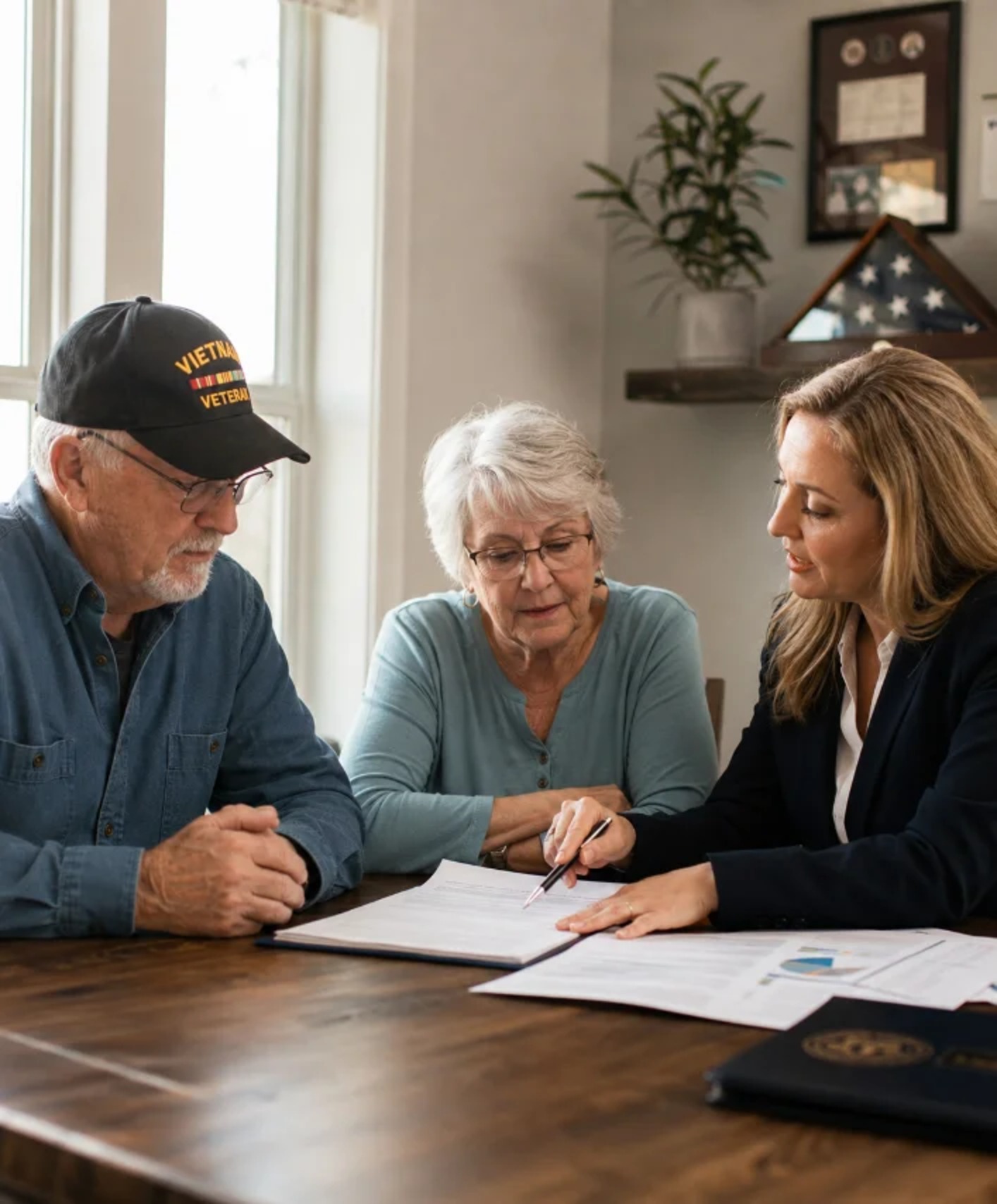
VA Claims for Lung Cancer FAQs
What benefits can I get with lung cancer?
If you have lung cancer, you can get a wide range of VA benefits, including disability compensation typically worth $4,158.17 a month, free or inexpensive health care, and more.
VA benefits for lung cancer can go a long way toward helping you get the treatments needed after a diagnosis and afford expenses you may face.
Who is eligible for asbestos VA benefits?
Any U.S. veteran who was exposed to asbestos-containing materials during their service, and who is now dealing with a serious health illness as a result, could be eligible for VA benefits.
The VA may award asbestos benefits for:
- Asbestosis, a progressive lung disease
- Lung cancer of any type
- Mesothelioma, a cancer of the lung lining
Asbestosis and mesothelioma are only caused by asbestos, while lung cancer can be caused by asbestos as well as smoking or other service-related carcinogens.
Working with a VA-accredited claims agent can help ensure you have the supporting documentation needed to establish how your military service — and associated asbestos exposure — contributed to your diagnosis.
What is the VA rating schedule for lung cancer?
The VA assigns a 100% disability rating for active lung cancer — the highest available. With this rating, veterans can maximize their monthly VA disability payouts.
Veterans with lung cancer who receive a 100% disability rating can receive $4,158.17 a month if they’re married.
Is lung cancer covered as part of PACT Act benefits?
Yes, respiratory cancers of any type, which may include lung cancer, are currently covered by the PACT Act.
This means that if a veteran has been diagnosed — and if they were exposed to associated toxins like Agent Orange or burn pits during their service — they might automatically qualify for VA benefits.
However, in cases where another carcinogen like asbestos caused the cancer, veterans may need to submit supporting evidence with their VA claim to get benefits.
What is the average payout for lung cancer?
Right now, the average VA payout for lung cancer is $4,158.17 a month through disability compensation plans.
Veterans with lung cancer may receive even more if they file asbestos lawsuits or trust fund claims. For instance, lung cancer lawsuits sometimes award over $1 million to patients and families.
Call (877) 446-5767 now to find out how much financial compensation could be awarded in your case.
Is lung cancer considered a 100% disability?
Yes, lung cancer is often considered a 100% disability if you’re actively undergoing treatment. In some cases, the VA may lower your disability rating if the lung cancer goes into remission, in which signs and symptoms disappear.
Does lung cancer automatically qualify for disability?
No, lung cancer typically doesn’t automatically qualify as a VA disability. Veterans and their VA-accredited representatives must provide records showing how service-related exposures (such as asbestos) led to the cancer, and then submit those with a VA disability claim.
However, if a veteran with lung cancer has toxic exposures listed under the PACT Act, they may potentially qualify automatically.
What is the holy grail of VA disability?
The holy grail of VA disability ratings is a 100% rating. This means the VA considers a veteran to be totally disabled, giving them access to maximum disability compensation, lowest medical co-pays, and other significant benefits.
Lung cancer veterans often receive a 100% disability rating since having cancer can be life-threatening.
What if I already have VA benefits and was just diagnosed with lung cancer?
In these situations, you can file additional claims along with supporting evidence to increase your VA benefits. For instance, proving you have service-related lung cancer could grant you a 100% disability rating.
For best results, work with experienced VA-accredited claims agents or attorneys who can best advise you on which forms and documentation you’ll need.
Can I still file for lung cancer VA benefits if I smoked?
Yes, you can still pursue lung cancer VA benefits even if you smoked. This is because other toxins that you were exposed to while serving may have contributed to your diagnosis.
For instance, the National Cancer Institute (NCI) notes that smokers who also came into contact with asbestos are at a higher risk of getting lung cancer compared to those who just smoked or were only exposed.
Call (877) 446-5767 now for more information on getting benefits and compensation for asbestos-related lung cancer — even if you smoked.
How can I check the status of a lung cancer VA benefits claim?
It can take up to several months from the time you file for VA benefits to actually start receiving them. The timeline depends on factors such as the complexity of your case and the evidence provided.
Here’s how you can check the status of your claim:
- Visit the VA website: Log in to your account at VA.gov to check your claim status online.
- Call the VA: You can contact the VA benefits hotline at 1-800-827-1000 to speak with a representative.
- Visit a regional VA office: If you prefer in-person assistance, visit your nearest VA office to get an update on your claim.
- Check your mail: The VA will send letters updating you on your claim’s progress and any additional documents required.
- Work with an accredited lawyer: A VA-accredited attorney or law firm specializing in disability claims can help track your claim, address delays, and ensure all necessary documents are submitted correctly.
If your claim is delayed or denied, an attorney can help you file an appeal to push for the VA disability benefits you deserve.
 Written by:Lung Cancer Group
Lung Cancer Group was established by a team of caring advocates so those with lung cancer and other asbestos-related diseases can get the help they deserve. Our site provides the most accurate and up-to-date information about lung cancer, its link to asbestos, and financial compensation available to patients. Contact us to learn more and get assistance.