Can a Lung Biopsy Cause Cancer to Spread?
A lung biopsy does not typically cause cancer to spread. The European Journal of Cardio-Thoracic Surgery conducted the largest study of tumor seeding — dislodging cancer cells during a biopsy — and found that only 8 of 4,365 participants developed metastatic cancer from the procedure.
For most people, confirming or ruling out the presence of lung cancer far outweighs the risk of tumor seeding from a biopsy. Learning more about lung biopsy procedures could help you feel confident about scheduling an appointment.
How Do They Do a Biopsy for Lung Cancer?
Pulmonologists conduct biopsies with specialized equipment that can remove a small sample of lung tissue for examination. Medical teams send the biopsy tissue to a pathology laboratory, where testing provides an accurate diagnosis.
The goal is to confirm whether a concerning spot found on imaging tests is an infection, lung cancer, or a benign (not cancerous) growth.
There are four main lung cancer biopsy methods:
- Needle lung biopsy: A long needle, guided by ultrasound or CT, is inserted into the lung through the chest wall to collect a tissue sample while the patient is awake.
- Open lung biopsy: A small incision opens the lung while the patient is under general anesthesia, so the surgeon can remove a tissue sample and close the wound with stitches.
- Thoracoscopic lung biopsy: A thoracoscope is inserted into the lung through an incision under the armpit and shoulder blade after the patient is sedated, providing a clearer view for tissue removal.
- Transbronchial lung biopsy: A bronchoscope slides through the airway into the affected lung, illuminating the area for tissue removal while the patient is under anesthesia.
Some doctors may recommend that patients undergo a liquid biopsy for their lung cancer screening. The newer procedure uses blood or other bodily fluids to search for genetic biomarkers of non-small cell lung cancer (NSCLC) tumors.
While there is a risk for any lung biopsy to cause tumor seeding, it is very low. Due to this, biopsies are generally considered very safe and the benefits of confirming a diagnosis outweigh the potential risk.
Get our Free Lung Cancer Guide now to learn about talking with your doctor about lung biopsies, possible risks when getting diagnosed and treated, and which options could work best for you.

- Understand risk factors
- Find top treatments
- Pursue compensation

Does a Lung Biopsy Spread Cancer?
A biopsy is not likely to spread lung cancer, but feeling worried is understandable. In a study from Translational Lung Cancer Research, there was a 3.3% chance of lung cancer metastasis to the pleura (lung lining) or contaminating healthy tissue with malignant cells due to a biopsy.
However, lung cancer patients are much more likely to develop less serious complications instead of cancer cells spreading through the body.
The more common lung biopsy risks are:
- Bleeding
- Discomfort
- Infection
- Mild pain
Talking with your doctor about your concerns could clarify your personal risks. They’ll go over your medical history, which biopsy procedure they recommend, and what can be done to help you feel more comfortable with your next steps.
Where Could Lung Cancer Spread After a Biopsy?
In the very rare case that a biopsy causes lung cancer cells to be released, the cancer could potentially migrate to different areas in the body. In these cases, lung cancer spread usually reaches local tissues.
Following a biopsy, lung cancer cells could reach the:
- Bloodstream
- Chest wall
- Pleura (lung lining)
In some cases, metastatic lung cancer can also worsen if a biopsy is done. This occurred in a patient with lung cancer that had metastasized to the brain. It was later revealed that a CT-guided biopsy of brain lesions had led to tumor seeding, per BMC Pulmonary Medicine.
It may not be immediately clear that lung cancer has spread due to a biopsy. It takes on average 7 months for lung cancer tumor seeding to be diagnosed. In some cases, seeding isn’t discovered until over 2 years after a biopsy was first performed, according to BMC Pulmonary Medicine.
With all that said, doctors will regularly monitor you or a loved one and recommend the best lung cancer treatments available in the rare event that tumor seeding has happened.
Do You Need a Biopsy to Diagnose Lung Cancer?
Yes, a biopsy is often necessary to diagnose lung cancer because it is the only way to confirm if a growth within the lungs is cancerous or not.
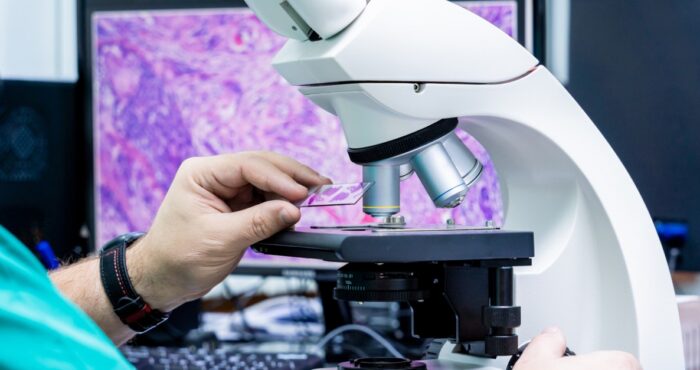
Other diagnostic tests, like imaging scans and blood tests, cannot definitively prove that you have lung cancer. By removing a biopsy sample, doctors can look at the cells under a microscope to identify if the nodule is malignant and which type of cancer you have.
The lab results also help determine the best therapeutic approach depending on your specific tumor subtype, overall health, and other factors unique to your diagnosis.
Get a Free Lung Cancer Guide now to learn what to expect from a lung cancer biopsy, diagnostic tests, and treatment plans.
- Understand risk factors
- Find top treatments
- Pursue compensation
Can Lung Cancer Be Diagnosed Without a Biopsy?
No, diagnosing lung cancer without a biopsy is not possible. While your doctor can review CT imaging to identify nodules, they can’t determine if it’s cancer from visuals alone.
A liquid biopsy may also be an option in some cases, such as for early detection. However, your doctor may recommend a traditional biopsy if they need to inspect a nodule’s tissue structure.
In very rare situations, specialists may consider a lung biopsy unnecessary. For instance, a 2024 Translational Lung Cancer Research report noted that patients who have possible early-stage lung tumors could be better off getting them surgically removed without biopsy testing.
Study authors noted that in these cases, a minor surgical procedure to extract the tumors was a safer option due to the potential risks of tumor seeding from biopsy — even though the diagnosis wouldn’t be confirmed.
What Percentage of Lung Biopsies Are Cancer?
Only 5% of lung nodules turn out to be malignant after biopsy testing. However, your odds of developing lung cancer may be higher if you have a history of strong risk factors like smoking or larger nodules.
As part of your lung cancer biopsy results, your doctor classifies the nodules they’ve examined. The Lung Imaging Reporting and Data System (Lung-RADS) categories determine your risk and can change which treatments they recommend.
Here are the Lung-RADS classifications:
- Category 1: no nodules or nodules that have minor benign indicators (less than 1% chance of malignancy)
- Category 2: nodules that have a benign appearance or behavior (less than 1% chance of malignancy)
- Category 3: nodules with some cancerous indicators (1-2% chance of malignancy)
- Category 4A: nodules with cancerous factors (5-15% chance of malignancy)
- Category 4B: nodules that are stable or growing with cancerous indicators (more than 15% chance of malignancy)
- Category 4X: nodules with very suspicious cancerous factors (more than 15% chance of malignancy)
If your doctor recommends getting a biopsy, it’s because earlier imaging suggests there’s a risk of cancer. The benefits of an accurate diagnosis far outweigh the very small risk of tumor cell displacement.
Get Help After a Lung Cancer Diagnosis
Biopsies are often essential to knowing if you have lung cancer or not. If you or a loved one got a biopsy for lung cancer and received a positive test result, you don’t have to navigate this journey alone.
We can help you understand what caused the illness, what treatment options are available, and whether financial compensation may be possible.
Reach out if you need help with:
- Finding the best lung cancer doctors close to your home
- Comparing support options for yourself or your loved one
- Learning about top lung cancer biopsy and treatment options
- Seeking financial compensation if possible
Get our Free Lung Cancer Guide or call us at (877) 446-5767 to speak with our team. We’ll review your situation and help you get the best care possible.
 Written by:Lung Cancer Group
Lung Cancer Group was established by a team of caring advocates so those with lung cancer and other asbestos-related diseases can get the help they deserve. Our site provides the most accurate and up-to-date information about lung cancer, its link to asbestos, and financial compensation available to patients. Contact us to learn more and get assistance.