Chemotherapy for Lung Cancer
Chemotherapy uses anti-cancer drugs to kill lung cancer cells and reduce the size of tumors. Many lung cancer patients receive chemotherapy treatment, typically as part of a larger treatment plan for best results. Learn more about chemotherapy for lung cancer, what to expect from treatment, and more.
How Lung Cancer Chemotherapy Is Used
Chemotherapy is one of the most widely used lung cancer treatments. Patients receive cancer-killing medications that circulate through the body. The chemotherapy drugs destroy lung cancer cells in their path.
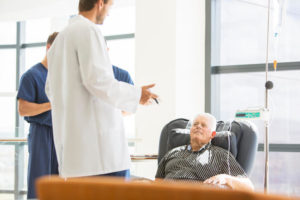 Oncologists (cancer doctors) often use chemotherapy for lung cancer as part of a broader treatment plan. Chemotherapy may be combined with surgery, radiation, or immunotherapy to ensure that as much of the cancer as possible is destroyed.
Quick Facts About Chemotherapy for Lung Cancer
- Chemotherapy is available to treat the two main types of lung cancer, which are non-small cell lung cancer (NSCLC) and small cell lung cancer (SCLC).
- Commonly used chemotherapy drugs for lung cancer include pemetrexed (Alimta), cisplatin, carboplatin, and more.
- Lung cancer patients typically need 4-6 cycles of chemotherapy for best results.
- Some patients have become long-term cancer survivors, living for decades as a result of chemotherapy and other treatment options.
Chemotherapy is an incredibly versatile treatment for lung cancer patients in both early stages and in advanced stages. However, some may be concerned about the cost of chemotherapy.
Get a Free Lung Cancer Guide to learn about how chemotherapy can help you, and how to afford it and other top treatments.

- Understand risk factors
- Find top treatments
- Pursue compensation
Chemotherapy for Lung Cancer Types
Which chemotherapy drugs will be recommended depends on the type of lung cancer a patient has, among other factors. Here’s a breakdown of chemo drugs typically used for NSCLC and SCLC.
Non-Small Cell Lung Cancer
Non-small cell lung cancer (NSCLC) is the most common type of lung cancer. NSCLC is typically less sensitive to chemotherapy than SCLC, but doctors often still recommend this treatment.
Drugs used as part of a chemo regimen for NSCLC may include:
- Albumin-bound paclitaxel (Abraxane, nab-paclitaxel)
- Carboplatin
- Cisplatin
- Docetaxel (Taxotere)
- Etoposide (VP-16)
- Gemcitabine (Gemzar)
- Pemetrexed (Alimta)
- Vinorelbine (Navelbine)
In early-stage patients, doctors may combine surgery with a chemo regimen for non-small cell lung cancer to destroy as much of the cancer as possible.
NSCLC chemotherapy treatments can also help improve survival time and quality of life for patients with advanced (metastatic) disease.
Small Cell Lung Cancer
Small cell lung cancer (SCLC) is a rarer type of lung cancer and it spreads much faster than NSCLC. Surgery isn’t typically an option for these patients, meaning that chemotherapy and other systemic treatments must be used.
Cancer care teams may recommend these chemotherapy drugs for SCLC:
- Etoposide and cisplatin (or carboplatin)
- Irinotecan (Camptosar) and carboplatin
- Irinotecan (Camptosar) and cisplatin
- Lurbinectedin (Zepzelca) or topotecan (Hycamtin) for recurring SCLC
“Even though SCLC has a tendency to grow quickly, it often shrinks quickly as a response to chemotherapy, radiation therapy, or both.”
– Dr. Henry Park, Yale Medicine radiation oncologist
Lung Cancer Group can help you better understand how chemotherapy could help you after a diagnosis and how to afford care. Call (877) 446-5767 to learn more.
What to Expect From Chemotherapy Lung Cancer Treatments
Undergoing chemotherapy for lung cancer can be daunting, especially if you’ve never done so before. Because of this, it’s helpful to know what to expect going into it.
Doctors will likely prescribe a combination of chemotherapy drugs to be administered in cycles or rounds. A chemotherapy cycle involves a schedule for injection and recovery before repeating.
Learn more about the steps to getting chemotherapy for lung cancer below.
1. Chemotherapy Drugs Injection
The most common way chemotherapy for lung cancer is administered is through a needle into a vein (intravenous or IV). This can be done at a chemotherapy clinic or a general hospital.
The length of time for the injection may range from 5 minutes to over 8 hours, depending on the chemotherapy regimen.
Throughout the injection, the nurse will check your vitals and ensure the chemo drugs are being administered properly. You can use the injection time to eat, read, check out social media, sleep, relax, or work.
2. Rest Period
After the injection is finished, patients return home to rest and recover. It is common for patients to experience side effects of chemotherapy for lung cancer, like nausea, loss of appetite, and hair loss, during the rest period.
Don’t hesitate to talk to your doctor about any side effects. They may be able to prescribe medications to help ease them, making your recovery process smoother.
3. Next Chemotherapy Injection
After your recovery, you will go back to your provider for the next injection cycle. You will repeat this process until the end of your treatment plan.
Some regimens may require treatment to be given daily or once a week, followed by a period of rest that can last a few days or weeks to allow the body to recover.
How Many Chemo Treatments for Lung Cancer Are Needed?
It’s likely that you will need multiple cycles of chemotherapy to help destroy or shrink as much of the lung cancer as possible.
For both NSCLC and SCLC, chemotherapy is typically provided in 4-6 cycles, according to Tuberculosis & Respiratory Diseases and the Journal of Thoracic Disease.
However, your doctor can give you a better idea as to how many rounds of chemo treatment you may need to go through in order to start seeing results.
If you are concerned about affording multiple cycles of chemotherapy treatment, Lung Cancer Group might be able to help. Get started with a Free Lung Cancer Guide today.
- Understand risk factors
- Find top treatments
- Pursue compensation
Side Effects of Chemotherapy for Lung Cancer Patients
Because chemotherapy for lung cancer can damage healthy cells while killing cancerous ones, it can cause side effects. Patients may experience side effects during, immediately after, or a few weeks or days after chemotherapy.
Common side effects of chemotherapy include:
- Constipation
- Fatigue
- Hair loss
- Loss of appetite
- Peripheral nerve damage
- Skin problems
- Sore throat and mouth
- Vomiting and nausea
While side effects of chemotherapy for lung cancer can be unpleasant, the good news is that doctors have options to help relieve them.
Different pain-relieving options like medications can go a long way to ensuring patients get all of the benefits of chemotherapy with as few downsides as possible.
“Chemotherapy can affect normal cells including blood, skin and nerve cells. It is important to work closely with your care team to manage your side effects. Ask about consulting with a palliative or supportive care doctor whose specialty is side effect management.”
– American Lung Association
Chemotherapy and Other Treatments for Lung Cancer
Chemotherapy for lung cancer is often very effective in destroying tumors, and when combined with other treatments, it can have even greater success.
Many doctors seek to combine chemotherapy for lung cancer with other options in multimodal plans to give patients the best chance of living longer.
Treatments commonly used with chemotherapy in a multimodal plan include:
- Immunotherapy: This treatment uses special medications to help the body’s immune system target and eliminate cancer. Immunotherapy drugs block proteins present in cancer cells that protect them from an immune response.
- Surgery: If the patient is healthy enough, doctors may perform surgery to remove any visible tumors. Chemotherapy can help destroy microscopic cancer cells after a surgery, or shrink lung tumors so they’re easier to take out.
- Radiation: Targeted beams of energy help break up lung cancer tumors, and when combined with chemotherapy, more of the cancer can be destroyed.
Doctors may also recommend alternative therapies, like yoga and massage, that can help ease side effects of chemotherapy for lung cancer and general symptoms.
Contact us now to find out more about how chemotherapy and other lung cancer treatments could be used to improve your survival time.
Lung Cancer Chemotherapy Drugs in Clinical Trials
Clinical trials are research studies involving human volunteers. Scientists use clinical trials to test the safety and effectiveness of new lung cancer chemotherapy regimens, typically in combination with other options.
Clinical trials studying lung cancer chemotherapy drugs include:
- Durvalumab with chemotherapy and radiation therapy: Researchers are studying how well durvalumab, an immunotherapy drug, with radiation therapy and chemotherapy works in treating patients with stage III NSCLC that is unresectable (cannot be removed by surgery).
- Pembrolizumab with or without chemotherapy: A clinical trial is testing to see if this immunotherapy drug can help stage 4 lung cancer patients who haven’t gotten treatment yet. Patients will get pembrolizumab by itself first, and then a combination of carboplatin or pemetrexed and pembrolizumab.
- Proteomic-guided systemic therapy: With this study, doctors are looking to measure how well patients may tolerate immunotherapy and chemotherapy for lung cancer before treatment with new testing procedures.
While each has its own specific eligibility requirements, you can ask your doctor about lung cancer clinical trials testing chemotherapy that you may be able to join.
Chemotherapy for Lung Cancer Prognosis
Your prognosis, or projected health outcome for lung cancer, will be unique to the specifics of your situation. With that said, chemotherapy is often crucial to help improve a lung cancer prognosis since it can help destroy tumors.
Lung cancer chemotherapy can help with:
- Life expectancy: Early-stage lung cancer patients treated with chemotherapy lived for 12-16 months, per The Oncologist. In addition, between 60% and 80% of all patients showed at least a partial response (meaning tumors shrank) thanks to chemotherapy.
- Survival rates: Lung cancer chemotherapy alone boosted 1-year survival rates to 29%, compared to just 20% for patients who didn’t receive it, according to the International Journal of Clinical Oncology.
When chemotherapy is used alongside other treatments, it can have even greater results on survival. A recent trial found that patients who received immunotherapy along with chemotherapy had a 5-year survival of 18.4%, nearly double the survival of those who did not receive the combination.
Get a Free Lung Cancer Guide for more information on improving your lung cancer prognosis with chemotherapy and other treatments.
- Understand risk factors
- Find top treatments
- Pursue compensation
Get Help With Chemotherapy for a Lung Cancer Diagnosis
Undergoing chemotherapy for lung cancer can be daunting for patients and their loved ones. Although chemotherapy can extend survival, the cost of chemotherapy can leave it out of reach for many families who need it most.
If your lung cancer was caused by asbestos exposure, Lung Cancer Group can help you and your family seek financial aid and justice.
Our team can:
Give you information on top chemo treatments
Offer support as you face lung cancer
Help you pursue compensation to cover costs
Call (877) 446-5767 or get a Free Lung Cancer Guide to learn more about the ways we assist families like yours.
Chemotherapy Treatment for Lung Cancer FAQs
How bad is chemo for lung cancer?
While chemotherapy does cause some side effects, such as nausea, vomiting, and hair loss, doctors can recommend pain-relieving options to better tolerate them.
It is very important to consider chemotherapy for lung cancer in spite of the potential side effects, as it is often a main way doctors treat tumors to improve life expectancy.
How successful is chemotherapy for lung cancer?
While the success of chemotherapy varies from patient to patient, many have seen encouraging results. In fact, chemotherapy has helped some become long-term lung cancer survivors.
For instance, Walter is still living today more than a decade after being diagnosed with stage 3 lung cancer thanks to chemotherapy and radiation treatments.
“I won’t lie, it was a long, tough road, but the only time I spent in the hospital were the first ten days,” Walter said in an interview with Yale Medicine. “I was able to go home after treatment and recover, which was so important to me.”
How much does chemotherapy cost?
Without insurance, the total cost of lung cancer treatment can reach up to $140,000, according to the American Cancer Society. The cost of chemotherapy will vary, depending on your lung cancer stage and type, insurance coverage, and other factors.
Our team may be able to help you access compensation to cover chemotherapy for lung cancer and other expenses. Contact us today to see how we can help.
How many rounds of chemo for lung cancer are needed?
Generally speaking, doctors recommend 4-6 cycles of chemotherapy for lung cancer. However, the number of chemotherapy sessions you’ll need in your case could depend on your health, your lung cancer type and stage, and more.
Talk to your cancer care team to learn more about whether chemotherapy could work in your case and, if so, how many cycles you may need.
Will chemotherapy cure lung cancer?
There is no official cure for lung cancer, but chemotherapy can help cancer patients live longer.
Many patients have achieved lung cancer remission, where signs and symptoms lessen or disappear, thanks to aggressive chemotherapy regimens.
Call (877) 446-5767 now to find out more about how lung cancer chemotherapy could work to improve your survival time.
When is chemotherapy used to treat lung cancer?
Doctors have many different applications for lung cancer chemotherapy, allowing them to tailor it to each individual patient’s needs.
For example, chemotherapy can be used before surgical procedures to shrink lung cancer tumors. This is called neoadjuvant chemotherapy. Chemotherapy used after surgery can lower the risk of cancer cells returning (recurrence) and is known as adjuvant chemotherapy.
Oncologists may also combine chemotherapy with radiation therapy (also called chemoradiation or chemoradiotherapy), or immunotherapy, to treat lung cancer.