Lung Cancer Remission
Lung cancer is in remission when a patient has fewer or no symptoms and tumors have shrunk or vanished. Lung cancer patients often live longer when in remission. In some cases, the cancer may never come back. Treatments can help you work toward lung cancer remission and living longer.
Can Lung Cancer Go Into Remission?
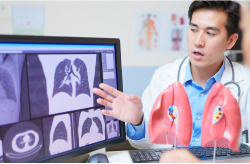 Yes, lung cancer can go into remission, where signs and symptoms of the disease disappear or lessen.
Lung cancer remission doesn’t mean you’re cured. However, you or a loved one could have a much better prognosis, or overall health outlook, as a result.
Lung cancer remission rates depend on the type of lung cancer, stage, treatments used, and other factors. The best way to achieve remission is to get treatments that can destroy as much of the cancer as possible. And even if you don’t go into remission, getting treatment can still help you live longer.
Lung Cancer Remission Quick Facts
- Roughly 57% of non-small cell lung cancer (NSCLC) patients were still in remission 2 years after treatment, according to a study from The Annals of Translational Medicine.
- Current Oncology noted that over 27% of small cell lung cancer (SCLC) patients remained in remission following treatment.
- Some patients have lived for 20 years or more in remission, becoming long-term lung cancer survivors.
Get a Free Lung Cancer Guide to learn about treatments that can help you achieve remission and how to pay for them.

- Understand risk factors
- Find top treatments
- Pursue compensation
Types of Lung Cancer Remission
There are several types of lung cancer remission, and each can greatly impact how long you may live.
Types of lung cancer remission include:
- Complete remission: You have no evidence of disease (NED) on imaging tests or scans.
- Partial remission: Lung cancer may still be present, but tumors have shrunk.
- Spontaneous remission: Your cancer disappears or shrinks with no treatment, which is rare. You’ll need treatment in almost all cases to achieve remission.
- Stable disease: The cancer doesn’t shrink but also stops growing. It can be unsettling to know you still have cancer, but long-term survivorship may still be possible.
“I’ve never thought of myself as NED because I still have so much going on in my lungs. There are still nodules.”
— Bobbi, 20+ year lung cancer survivor
Your doctor will tell you if your lung cancer has gone into remission and recommend ways for you to live longer.
Lung Cancer Recurrence After Remission
 Lung cancer recurrence or relapse happens when the cancer comes back after a period of remission. Most lung cancer tumors recur within 5 years of treatment.
SCLC is much more likely to recur than NSCLC. Over 90% of SCLC cases return within 2 years, compared to roughly 60% of NSCLC cases.
Your medical team will monitor you to catch any signs of lung cancer recurrence and recommend more treatments to send the cancer back into remission.
Non-Small Cell Lung Cancer Remission
Non-small cell lung cancer (NSCLC) is the most common type of lung cancer and responds well to treatments. As a result, remission is more likely if you have NSCLC.
Statistics about NSCLC remission include:
- Up to 80% of NSCLC patients achieved at least partial remission when treated with immunotherapy and surgery, according to Translational Lung Cancer Research.
- A study from Respiratory Research found that over 7% of stage 3 NSCLC patients and nearly 2% of stage 4 NSCLC patients achieved complete remission. These statistics are notable since stages 3 and 4 are advanced, so patients normally don’t live as long.
- Only about 1 in 10 NSCLC patients who were cancer-free after 5 years experienced recurrence in the following 5 years, as noted by Oncology and Therapy.
Call (877) 446-5767 to find help affording treatments that can improve your odds of lung cancer remission.
Small Cell Lung Cancer Remission
Small cell lung cancer (SCLC) is rarer and harder to treat than NSCLC. However, remission could still be possible. SCLC remission rates were encouraging among patients treated with chemotherapy and radiation.
A BMC Cancer report on SCLC remission found that:
- 35% of SCLC patients achieved full remission.
- 42% entered partial remission thanks to chemotherapy and radiation.
- Nearly all the other patients achieved stable disease with treatment.
Your cancer care team can recommend treatments to help work toward SCLC remission depending on the unique factors in your case.
Treatments to Achieve Lung Cancer Remission
Different lung cancer treatments allow doctors to remove and destroy tumor cells, giving you the best chance of achieving remission. Learn about top treatment options to become cancer-free below.
Lung Cancer Surgery
With surgery, oncologists (cancer doctors) remove lung cancer tumors and diseased tissue. It is very effective for NSCLC, giving many early-stage patients a better chance of remission.
Lung cancer surgery is rarely used for SCLC, but doctors may recommend it if the cancer is in a very early stage.
Get a Free Lung Cancer Guide to learn more about treatments like surgery that could send your lung cancer into remission and how to afford them.
- Understand risk factors
- Find top treatments
- Pursue compensation
Lung Cancer Chemotherapy
Chemotherapy uses drugs to kill cancer cells, which could allow patients to reach lung cancer remission.
Doctors often use several chemotherapy drugs to destroy as much of the cancer as possible, especially in early-stage cases. Common lung cancer chemotherapy drugs include carboplatin, cisplatin, and pemetrexed.
Radiation Therapy
Radiation therapy uses concentrated beams of energy to shrink tumors and kill cancer cells. It’s typically used with other treatments like chemotherapy to improve the odds of survival and long-term remission.
For example, it may be provided to prevent metastasis, or cancer spread, to other parts of the body in SCLC patients who enter remission, according to Radiation Oncology.
Immunotherapy
Immunotherapy is medication that helps your immune system find and destroy cancer cells. This treatment has shown a lot of promise in improving lung cancer remission rates and survival times.
For example, two patients with a type of NSCLC called adenocarcinoma achieved complete remission with immunotherapy, according to Respiratory Medicine Case Reports.
Multimodal Therapy
Cancer centers often use multimodal therapy, which is several treatments together, to help lung cancer patients achieve remission. Using multiple treatments helps kill as much cancer as possible.
For instance, a 71-year-old woman with lung cancer that had spread to her brain achieved complete remission for almost 10 years thanks to a combination of radiation, chemotherapy, and surgery, according to a Cureus report.
Clinical Trials
Clinical trials study new treatments for lung cancer. Some patients achieve lung cancer remission or live longer by getting treatments from trials.
Nancy Hale lived for 12 years in part thanks to an immunotherapy trial offered by the Dana-Farber Cancer Institute that sent her stage 4 lung cancer into remission.
Get help affording treatments that could potentially send your lung cancer into remission. Contact us now to learn more.
Factors That Influence Lung Cancer Remission
Outside of getting treatments, factors unique to each person’s case will affect their chances of achieving lung cancer remission.
Factors that may affect lung cancer remission include:
- Age: Younger patients are more likely to enter remission as they can typically receive and recover from more aggressive treatments.
- Lifestyle: Eating a healthy diet, performing low-stress exercises like walking, sleeping well, and staying hydrated can help your body fight lung cancer.
- Overall health: Remission is more likely if you are in generally good health outside of having lung cancer.
- Quitting smoking: Not only is smoking a big risk factor for lung cancer, but it also makes it harder for your body to fight tumors.
Get a Free Lung Cancer Guide to learn more about working toward remission and steps to take to live longer.
- Understand risk factors
- Find top treatments
- Pursue compensation
We Can Help You Work Toward Lung Cancer Remission
While a lung cancer diagnosis can bring uncertainty, remission may be possible, even with late-stage or advanced cancer. Working with lung cancer specialists and getting prompt treatment could potentially help you live cancer-free.
At Lung Cancer Group, we’re ready to help patients and families navigate life after a diagnosis and find resources that could allow them to reach remission.
Work with Lung Cancer Group to:
- Afford treatments that can send lung cancer into remission
- Get a better understanding of lung cancer remission rates
- Learn which treatments could be best in your case
Don’t wait: Call (877) 446-5767 or get a Free Lung Cancer Guide right now. Our team stands ready to assist you and your family in any way we can.
Lung Cancer Remission FAQs
Can stage 4 lung cancer go into remission?
Yes, it is possible for stage 4 lung cancer to go into remission. In a 2019 study, 1.8% of stage 4 NSCLC patients achieved remission.
While the stage 4 lung cancer remission rate is very low, it could be possible in your case depending on how the cancer responds to treatment. For example, stage 4 lung cancer patient Nancy Hale went into remission for 12 years after getting immunotherapy in a clinical trial.
Call (877) 446-5767 now for help paying for lung cancer treatments that could allow you to live as long as possible.
Can small cell lung cancer go into remission?
Yes, it’s possible for small cell lung cancer (SCLC) to go into remission. You’ll have a better chance of achieving SCLC remission if your cancer is diagnosed and treated before it spreads.
Working with experienced lung cancer doctors who can recommend treatments is the best way to achieve SCLC remission. Without treatment, it’s not very likely that your cancer will get better.
What is the lung cancer remission rate?
Lung cancer remission rate is the number of patients whose tumors shrink or vanish following treatments. Remission rates vary but can give you an idea of what to expect.
Non-small cell lung cancer (NSCLC) patients had a remission rate of 57% 2 years after treatments, according to an Annals of Translational Medicine study.
In another study, 35% of SCLC patients achieved full remission and 42% reached partial remission thanks to chemotherapy and radiation.
Does lung cancer come back after remission?
Lung cancer often comes back after remission. This is known as recurrence. Roughly 90% of SCLC patients and 60% of NSCLC patients experienced a recurrence within 2 years.
Since SCLC is more aggressive, this cancer usually recurs within 1 year after a patient receives their initial treatments. Still, in rare cases, lung cancer doesn’t come back after treatment.
Contact us now to explore options to pay for treatment if you have recurrent lung cancer. If eligible, you may qualify for compensation.
What is the recurrence rate of stage 1 lung cancer?
The recurrence rate of stage 1 non-small cell lung cancer is between 5% and 19%, according to the Willamette Valley Cancer Institute and Research Center. This means most early-stage NSCLC patients remain in remission.
Stage 1 cancer has the lowest recurrence rates since doctors can often remove all visible tumors. Still, if your cancer comes back after a period of remission, follow-up treatment could help.
How long can lung cancer stay in remission?
Lung cancer can stay in remission for very long periods of time, depending on how the cancer responds to treatments. Many patients have lived for many years or decades cancer-free.
For example, Tabitha has been in remission for over 5 years after her metastatic adenocarcinoma diagnosis thanks to chemotherapy and radiation. “I was told by my oncologist that I am currently in remission,” she says. “But in the same breath, he also said that he sees no cancer in my body.”
Is it possible to fully recover from lung cancer?
Yes, it may be possible to fully recover from lung cancer with the right treatment plan. Treatments can send lung cancer into long-term or permanent remission in some cases, allowing patients to live for a long time.
Even if full recovery isn’t possible, treatment may help shrink tumors, ease symptoms of lung cancer, and improve your quality of life.
How likely is lung cancer to come back after surgery?
It is somewhat likely that lung cancer will come back if you’re treated with surgical resection, according to some studies. For example, Cancers reports that 30% to 50% of lung cancer patients treated with surgery will experience recurrence.
With that being said, surgery remains an important option for many lung cancer patients. You can ask your lung cancer doctor about the potential risk of lung cancer recurrence if you’re worried before receiving this treatment.