Mesothelioma
Mesothelioma is a cancer that develops in the lining of the lungs, abdomen, heart, or testicles decades following asbestos exposure. Though this cancer is aggressive, you may live a long time with medical care. Lung Cancer Group can help you find top doctors who treat mesothelioma and seek compensation for expenses.
What Is Mesothelioma?
Malignant mesothelioma is a rare form of cancer. It develops in the mesothelium, the body’s internal lining that protects major organs, after asbestos exposure.
Mesothelioma cancer tumors can spread quickly, but long-term survival could be possible by getting treatments from experienced cancer doctors.

Mesothelioma is a rare and aggressive cancer caused by asbestos exposure. It forms in the lining of the lungs, heart, abdomen, or testicles 10-50 years after asbestos exposure.
Duration: 1 min 30 sec
Quick Facts About Malignant Mesothelioma
- About 3,000 new cases of mesothelioma are diagnosed every year.
- The average life expectancy is 12-21 months, but some patients live for 25+ years.
- It’s not a type of lung cancer, but many cases affect the lining of the lungs.
- U.S. veterans account for 1 in 3 mesothelioma patients.
- You may qualify for compensation worth $1 million or more on average.
At Lung Cancer Group, we can answer questions about mesothelioma, find top doctors, and work to recover financial compensation. Speak with our on-staff nurses now to get started.
- Access Financial Aid and Justice
- Learn About Your Options
- Contact Us for Free

Mesothelioma vs. Lung Cancer
Is mesothelioma lung cancer? No. Both lung cancer and mesothelioma can be caused by asbestos exposure, but the two conditions aren’t the same.
Here are the main differences between the two:
- Mesothelioma forms in the lining of different organs, including the lungs or abdomen, and is only caused by asbestos exposure.
- Lung cancer develops in the lungs themselves. It’s mainly caused by smoking, but asbestos, radon, and more can also lead to lung cancer.
Our team may be able to help patients with mesothelioma and lung cancer. Call (877) 446-5767 now to learn more.
Mesothelioma Symptoms
Mesothelioma symptoms usually develop 10-50 years after asbestos exposure.
The most common mesothelioma symptoms include chest pain, a cough that won’t go away, shortness of breath, and pleural effusion (fluid buildup in the lung lining).
- Abdominal pain
- Appetite loss
- Blood clots
- Cough (or coughing up blood)
- Difficulty breathing
- Fatigue
- Fever
- Unexplained weight loss
Symptoms can vary depending on where the cancer forms. For example, since pleural mesothelioma starts in the lung lining, patients usually experience pleural effusions first.
Peritoneal mesothelioma causes bloating and digestive issues since it affects the abdomen.
See a doctor immediately if you have any mesothelioma symptoms and were exposed to asbestos. An early diagnosis could allow you to access more aggressive treatments.
Mesothelioma Causes
The only known mesothelioma cause is asbestos exposure. There are no other proven causes besides asbestos.
Here’s how mesothelioma is caused by asbestos:
- If a product containing asbestos wears out, breaks down, or gets disturbed, tiny fibers can enter the air.
- Once airborne, you could breathe in or swallow the asbestos fibers without noticing.
- The fibers can get stuck in the linings of major organs and cause irritation.
- After 10-50 years, healthy cells can mutate into mesothelioma cancer cells.
“If there’s no asbestos, there’s no mesothelioma. It’s that simple. If you have mesothelioma, and you say, ‘Well, I’ve never been exposed to asbestos,’ you were exposed to it. You just don’t know where or you don’t know when.”
— Dr. Raja Flores, mesothelioma doctor
Who Is at Risk of Mesothelioma?
Anyone exposed to asbestos could get sick decades later. However, those at the highest risk worked with or around asbestos at their jobs, according to the Mesothelioma Applied Research Foundation.
- Boilermakers
- Construction workers
- Electricians
- Mechanics
- Military service members
- Plumbers
- Power plant workers
- Shipyard workers
These workers might have come in contact with asbestos products like insulation and cement every day. Family members were also at risk of secondhand exposure, since workers could carry asbestos fibers home on their clothing, hair, and skin.
Manufacturers of asbestos products hid the health risks until the truth became public knowledge in the early 1980s. However, by this point, millions of people had already been exposed. Thousands are diagnosed every year as mesothelioma takes decades to form after exposure.
Mesothelioma Types
There are four mesothelioma types, according to the American Cancer Society (ACS). Each type affects a different part of the body. Learn about the types of mesothelioma below.
![]() Pleural Mesothelioma
Pleural Mesothelioma
 Pleural Mesothelioma
Malignant pleural mesothelioma develops in the lining of the lungs (pleura) before spreading to other parts of the body. It is the most common type, accounting for 80% to 85% of all mesothelioma cases.
The best treatment is usually surgery to remove cancer tumors if patients are diagnosed with early-stage cancer. Other therapies like chemotherapy, radiation, and immunotherapy can also help kill cancer cells.
![]() Peritoneal Mesothelioma
Peritoneal Mesothelioma
 Peritoneal Mesothelioma
Peritoneal mesothelioma is the second-most common type, making up 10% to 15% of cases. It forms in the lining of the abdominal cavity (peritoneum).
Peritoneal mesothelioma patients often live for several years if they can get a treatment called cytoreductive surgery with HIPEC (heated chemotherapy).
![]() Pericardial Mesothelioma
Pericardial Mesothelioma
 Pericardial Mesothelioma
Pericardial mesothelioma is very rare, with only a few hundred cases ever reported. It forms in the lining of the heart (pericardium).
Surgeries and other treatments can often help patients who are diagnosed before this cancer spreads.
![]() Testicular Mesothelioma
Testicular Mesothelioma
 Testicular Mesothelioma
Testicular mesothelioma is the rarest type, with fewer than 300 documented cases. It develops in the lining of the testicles (tunica vaginalis).
Testicular mesothelioma can often be surgically treated if it’s caught early on. Some patients have lived for a decade or more as a result.
Mesothelioma Diagnosis
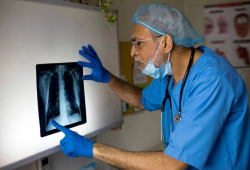 If you’re concerned that you may have mesothelioma, make sure to see a doctor. They’ll use a few different tests to determine if you have mesothelioma or another health condition.
The first step is a basic exam to discuss any symptoms and assess your overall health. Be sure to mention if you’ve ever been exposed to asbestos. Doctors can then use imaging tests to look for cancer tumors inside your body.
Imaging scans to diagnose mesothelioma include:
- Chest X-rays
- CT scans
- MRI scans
- PET scans
If doctors think you may have cancer after these tests, they’ll order a biopsy. This is a test to remove a fluid or tissue sample to look for cancer cells under a microscope. It’s the only way to confirm a mesothelioma diagnosis.
We’re here to help you get the care you need if you or a loved one is facing mesothelioma. Connect with our registered nurses now to see how we can assist you.
- Access Financial Aid and Justice
- Learn About Your Options
- Contact Us for Free
Stages of Mesothelioma
Doctors use stages to describe how far mesothelioma has spread. Your mesothelioma stage greatly impacts your treatment options and overall health outlook.
There are four stages of pleural mesothelioma. The other types don’t have official stages, but doctors may informally say you’re in an early or late stage depending on your cancer spread.
The stages of mesothelioma are:

Stage 1 mesothelioma is the least advanced and easiest to treat. Tumors are contained in the lining of the chest wall, so it can be treated with surgery, chemotherapy, radiation, and more.

Stage 2 has spread into the lungs, nearby lymph nodes, or diaphragm (the muscle that controls breathing). Many treatments are still available at this stage, including surgery.

In cases of stage 3 mesothelioma, tumors may be found deep in the chest wall, spine, and more lymph nodes. Mesothelioma surgery may or may not be possible.

Stage 4 is the most advanced stage and metastasis (cancer spread) has occurred, with tumors reaching the liver, bones, and more. Surgery isn’t an option, though some patients can live a long time with other treatments.
Mesothelioma Cell Types
Mesothelioma tumors are made up of different types of cells. Some are easier to treat than others, which can affect your health outlook. Learn about each mesothelioma cell type below.
Epithelioid Mesothelioma
Epithelioid (or epithelial) mesothelioma is the most common cell type, accounting for 70% of all cases. Epithelial cells grow rapidly but stick together. This makes the cancer spread less quickly than other cell types. Because of this, epithelial mesothelioma is the easiest type to treat.
Sarcomatoid Mesothelioma
Sarcomatoid mesothelioma is the least common type, accounting for 10-15% of mesothelioma cases. It’s hard to treat since the cells spread faster than epithelioid cells. That said, treatments can still help ease symptoms and allow patients to live longer.
Biphasic Mesothelioma
Patients have biphasic mesothelioma if their cancer tumors contain both epithelioid and sarcomatoid cells. It’s easier to treat if more epithelioid cells are present than sarcomatoid ones.
Effective treatments are available for all three mesothelioma cell types. Our nurses can review your treatments with you right now to find the best options for your case.
- Access Financial Aid and Justice
- Learn About Your Options
- Contact Us for Free
Mesothelioma Prognosis
A prognosis is the expected course your cancer will take. Doctors give a mesothelioma prognosis based on your cancer type, stage, and overall health.
Most mesothelioma patients only live a few years after a diagnosis. However, a prognosis can change over time and some patients survive for decades.
A prognosis is measured using life expectancy (how long patients live on average) and survival rate (percentage of patients still alive after a set period of time). Learn about each below.
Mesothelioma Life Expectancy
The average life expectancy for mesothelioma patients is 12-21 months. Your mesothelioma life expectancy could be longer or shorter depending on your unique diagnosis.
Some mesothelioma patients have lived for 25 years or more in rare cases, becoming long-term survivors.
“A lot of people can go on living for years with mesothelioma. And the goal is to just continue living for as long as somebody is feeling well and doing well.”
— Dr. Andrea Wolf, mesothelioma doctor
Mesothelioma Survival Rate
Mesothelioma has a 5-year survival rate of 15%, according to the ACS. With that said, survival rates can vary greatly by type, available treatments, and other factors.
Peritoneal mesothelioma and testicular mesothelioma both have 5-year survival rates of nearly 50%, for example.
You can use survival rate figures to get an idea of how long you may live, but doctors may not recommend taking them to heart. You are not a statistic, and could live longer than the average.
Mesothelioma Treatment Options
Different mesothelioma treatments allow doctors to shrink or remove tumors, kill cells, and ease symptoms with the goal of helping you live longer and feel better. Learn about mesothelioma treatment options that could help you below.
Surgery
Mesothelioma surgeries allow doctors to remove cancer tumors from the body. After recovering from mesothelioma surgery, patients should experience fewer symptoms.
Top mesothelioma surgeries include:
- Extrapleural pneumonectomy (EPP): Used to treat pleural mesothelioma by removing the lung, lining of the lung, and part of the diaphragm closest to the cancer tumors
- Pleurectomy with decortication (P/D): Also used to treat pleural mesothelioma by taking out the lung lining but without removing a lung, so patients can recover faster
- Cytoreduction with HIPEC: Used to treat peritoneal mesothelioma by combining cancer-removing surgery with heated chemotherapy
Surgeries are typically used on early-stage patients as doctors can remove all visible tumors and patients can recover with fewer complications.
Chemotherapy
Doctors use chemotherapy (cancer-killing medications) to destroy mesothelioma cancer cells. It’s given in cycles to ease side effects like hair loss. Low doses may also be used as palliative or pain-relieving care.
Call (877) 446-5767 to speak with a nurse who can answer your questions about mesothelioma treatments and determine which may be best for your case.
Radiation
Radiation therapy breaks down cancer cells using high-powered X-ray beams. Doctors may use radiation along with other treatments like surgery to kill as much of the cancer as possible.
In some cases, low doses of radiation therapy may be recommended as a form of palliative care.
Immunotherapy
Immunotherapy boosts the immune system to help the body find and destroy cancer cells. This newer treatment has shown promise in treating mesothelioma, particularly when combined with other therapies like surgery and chemotherapy.
Clinical Trials & New Treatments
Doctors use mesothelioma clinical trials to study newer treatments that may improve survival or reduce symptoms. Clinical trials are typically free to join provided that you meet the study criteria.
Newer mesothelioma treatments include:
- Cryoablation: A spray freezes and destroys mesothelioma tumors
- Gene therapy: Editing genes of mesothelioma cells so they can be destroyed
- Photodynamic therapy: Light-activated drugs kill cancer cells
- Targeted therapy: Destroying cancer with less harm to normal tissues
- Tumor Treating Fields (TTFs): Approved as a major treatment after success in trials, electrically charged pads stop the cancer from spreading.
You can ask a mesothelioma specialist if there are nearby clinical trials that you may be able to join.
Top Mesothelioma Doctors
Mesothelioma oncologists (cancer doctors) across the country dedicate their practice to treating this rare cancer. They see mesothelioma patients every day, allowing them to recommend the most effective treatment plans.
Top mesothelioma doctors include:
![Dr. Richard Alexander]()
Dr. Richard Alexander: Dr. Alexander treats peritoneal mesothelioma at the Rutgers Cancer Institute in New Jersey. He’s been helping patients for decades.
![Dr. Robert Cameron]()
Dr. Robert Cameron: Dr. Cameron has nearly 30 years of experience and invented the P/D surgery to treat pleural mesothelioma. Based in California, he treats both veterans and civilians.
![Dr. Raja Flores]()
Dr. Raja Flores: Dr. Flores has been treating pleural mesothelioma for over 25 years. He leads Mount Sinai Medical Center’s Department of Thoracic Surgery in New York.
![Dr. Hedy Lee Kindler]()
Dr. Hedy Lee Kindler: Dr. Kindler leads the University of Chicago’s mesothelioma program and has more than 25 years of experience. She can treat both pleural and peritoneal mesothelioma.
![Dr. James Pingpank]()
Dr. James Pingpank: Practicing at Pittsburgh’s UPMC Hillman Cancer Center, Dr. Pingpank has studied and treated peritoneal mesothelioma for more than 20 years.
![Dr. Taylor Ripley]()
Dr. Taylor Ripley: Dr. Ripley serves as the director of Baylor St. Luke’s Mesothelioma Treatment Center in Texas. He and his team work to help pleural mesothelioma patients live longer.






“Just because someone’s an oncologist doesn’t mean they see a lot of mesothelioma, so you want to see someone that’s a real mesothelioma specialist.”
— Dr. Raja Flores, mesothelioma doctor
It’s typically in your best interest to see a doctor who specializes in mesothelioma to get the most effective treatment plan possible.
Our on-staff registered nurses can put you in touch with leading mesothelioma specialists near you so you can get the treatments you deserve.
- Access Financial Aid and Justice
- Learn About Your Options
- Contact Us for Free
Mesothelioma Cancer Centers
Since mesothelioma is so rare, you’ll need to get treated at a cancer center with doctors on staff who specialize in it. This will help ensure that you’re in the best possible hands throughout your cancer battle.
Some of the top mesothelioma cancer centers include:
- Baylor St. Luke’s Medical Center in Houston, TX
- Brigham and Women’s Hospital in Boston, MA
- Duke Cancer Center in Durham, NC
- H. Lee Moffitt Cancer Center in Tampa, FL
- MD Anderson Cancer Center in Houston, TX
- Michael E. DeBakey VA Medical Center in Houston, TX
- Mount Sinai Medical Center in New York, NY
- National Cancer Institute in Bethesda, MD
- Sidney Kimmel Comprehensive Cancer Center in Baltimore, MD
- Sylvester Comprehensive Cancer Center in Miami, FL
- UPMC Hillman Cancer Center in Pittsburgh, PA
- University of Chicago Comprehensive Cancer Center in Chicago, IL
- University of Texas MD Anderson Cancer Center in Houston, TX
- UCSF Helen Diller Family Comprehensive Cancer Center in San Francisco, CA
- VA Boston Healthcare System in Boston, MA
- Vanderbilt-Ingram Cancer Center in Nashville, TN
- Washington Cancer Institute in Washington, D.C.
- West Los Angeles VA Medical Center in Los Angeles, CA
Call (877) 446-5767 now for help finding top mesothelioma hospitals near you.
Mesothelioma Survivor Stories
Mesothelioma patients can sometimes live for years or even decades longer than expected. Hear stories from mesothelioma survivors we’ve helped below.
Julie (diagnosed 2006)
Julie was diagnosed with mesothelioma in her 30s after being exposed to asbestos as a child. Her father, an electrician, died of asbestos lung cancer a year before her diagnosis.
Julie is still alive today thanks to treatment, and celebrating 20 years of survivorship in 2026. “Keep the faith and keep putting one foot in front of the other,” she says.
Mary Jane (diagnosed 2003)
Mary Jane learned she had peritoneal mesothelioma after complaining of abdominal swelling for a year. She endured multiple rounds of treatments like surgery and chemotherapy after her diagnosis.
Her cancer went into long-term remission and she became a 15-year survivor, passing away from other causes.
John (diagnosed 2019)
John has defied the odds and outlived his prognosis after his stage 4 pleural mesothelioma diagnosis. While most patients in this stage live just a few months, John is still enjoying life today following chemotherapy.
“I’m doing very well, as a matter of fact,” John says today. “I’m pretty well back to normal.”
Mesothelioma Compensation Options
Mesothelioma patients often qualify for different forms of financial compensation after a diagnosis. Mesothelioma compensation can help offset treatment costs, which often exceed $400,000, and keep families secure if a patient passes away.
Mesothelioma compensation options include:
- Asbestos lawsuits: Mesothelioma lawsuits allow patients to seek payouts from makers of asbestos-containing products. These legal claims usually award $1 million or more on average.
- Asbestos trust funds: Bankrupt asbestos companies set up trust funds to avoid lawsuits but still pay mesothelioma patients. A lawyer can help patients access some of the $30 billion available in trust funds.
- VA benefits: U.S. veterans are at high risk of mesothelioma due to military asbestos exposure. Through benefits offered by the U.S. Department of Veterans Affairs (VA), veterans can get over $4,000 a month in compensation and low-cost or free treatments.
Work with an experienced mesothelioma lawyer to pursue these different forms of compensation. Top mesothelioma attorneys will do all of the work, making it much easier to get the money you deserve.
Get a free case review now to learn if you can pursue compensation for mesothelioma.
We Help Mesothelioma Patients and Families
While having mesothelioma can be stressful, Lung Cancer Group is prepared to help you and your loved ones as you navigate this illness.
Some mesothelioma patients have been able to live for decades by working with the right doctors and getting effective treatments — even when facing late-stage cancer.
Here are 3 simple steps if you have mesothelioma:
- Call (877) 446-5767 to speak with our nurses about your options
- Find top doctors near you with our assistance
- Explore compensation options to help you cover expenses
Our team will stand behind you throughout your mesothelioma journey, offering support and understanding in any way we can. Connect with our nurses now to get started.
Mesothelioma FAQs
What is the survival rate for mesothelioma?
The 5-year mesothelioma survival rate is 15%, according to the American Cancer Society (ACS). However, this figure is only an average. You may be able to live longer depending on your diagnosis and how your body responds to treatments.
What is the difference between mesothelioma and lung cancer?
There are many differences between mesothelioma and lung cancer. They are two separate types of cancers, with lung cancer being a lot more common and having more treatment options.
However, both mesothelioma and lung cancer can be caused by asbestos exposure and will require specialist care in order for you to become a long-term survivor.
We may be able to help if you’ve been diagnosed with either one of these types of cancers. Contact us now to explore treatments and compensation options for health care expenses.
Can you survive mesothelioma?
Yes, while mesothelioma is aggressive, it’s possible to become a long-term survivor even when given months to live initially. Some mesothelioma patients have lived for decades.
Julie Gundlach will celebrate 20 years of survivorship in 2026, after undergoing numerous treatments like surgery and chemotherapy following her initial diagnosis. Doctors didn’t think that she’d even live a year, and her case was considered terminal at first.
Why is mesothelioma incurable?
There is no cure for mesothelioma or any other type of cancer at this time. This is because, even though doctors can sometimes remove all visible tumors, microscopic cells may be left behind and start to grow back.
While there is not a cure, long-term survivorship is possible. John Stahl has lived for over 5 years with stage 4 mesothelioma thanks to chemotherapy. His quality of life is very good, too, returning to normal activities like playing golf and spending time with friends following treatment.
What is mesothelioma caused by?
Mesothelioma is only caused by asbestos exposure. Asbestos fibers cause mesothelioma by burrowing into the linings of healthy organs and irritating them. After 10-50 years, normal cells can turn into malignant mesothelioma cells.
Is mesothelioma 100% fatal?
No, mesothelioma is not 100% fatal. By getting treatment, you could live much longer than initially expected. In some cases, mesothelioma patients have lived for close to 30 years depending on how their cancer responded to treatments.
Contact us now to learn about treatments that could allow you to become a long-term survivor.
What age do most people get mesothelioma?
Mesothelioma is most common in people over the age of 65. This is because the cancer typically develops decades after asbestos exposure.
Roughly 66% of mesothelioma patients are 65 or older, according to Lung Cancer International. However, even people in their 20s or 30s can develop this cancer if they’ve been exposed to asbestos.
What is mesothelioma remission?
Mesothelioma remission is when your cancer goes away. You can work toward remission by getting treatments to remove or shrink cancer tumors.
Your cancer could come back after it enters remission, though. This is called recurrence. Regular cancer screenings help catch cancer recurrence early if you’re in remission.
Who is the longest living person with mesothelioma?
The late Paul Kraus is considered the longest-living mesothelioma survivor. Diagnosed with advanced peritoneal mesothelioma in 1997, he credited dietary changes with helping him achieve long-term survival.
Paul lived for 27 years following his mesothelioma diagnosis, surviving other cancers along the way. He passed away in July 2024.
What is death from mesothelioma like?
If you are facing terminal mesothelioma, doctors can recommend palliative treatments that will give you the best possible quality of life in the time you have left. Hospice care may also be recommended, and many facilities offer round-the-clock pain management.
These options help ensure that you can live well in the face of end-stage mesothelioma, making the dying process easier to bear.